
Local
20 Years On: The day fire came for Junee

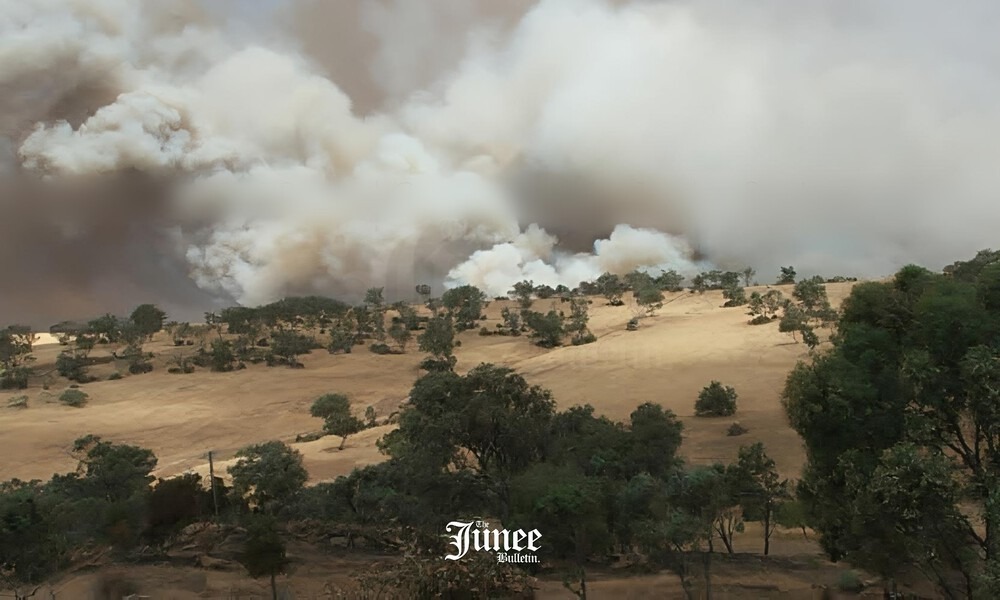
NEW Year’s Day, 2006, is etched into the memory of the Junee Shire.
Twenty years later, the scars have faded from the paddocks and hillsides, but the stories remain — of fear and courage, loss and resilience, and a town that stood its ground against one of the most destructive fires in its history.
This feature looks back at the day Junee was pushed to the brink — tracing the fire’s path from its ignition near the Jail Break Inn to the outskirts of town, and revisiting the moments, decisions and acts of courage that defined a day still felt across the shire two decades on.
THE morning of January 1, 2006, dawned heavy with warning.
The forecast had been stark.
Extreme temperatures, low humidity and strong winds were predicted across the Eastern Riverina Fire Area, prompting the declaration of a Total Fire Ban.
By 8.30am, the Riverina Fire Control Centre was operational, monitoring conditions that seasoned firefighters knew were dangerous.
The temperature had already climbed past 36 degrees, relative humidity sat at just 25 per cent, and winds were strengthening.
During the weekly radio check that morning, many brigade members voiced unease. Should a fire start, they said, it would run.
Just after 1pm, it did.
Firecom received reports of a fire west of Junee, near the Jail Break Inn café at the intersection of the Olympic Way and Goldfields Way.
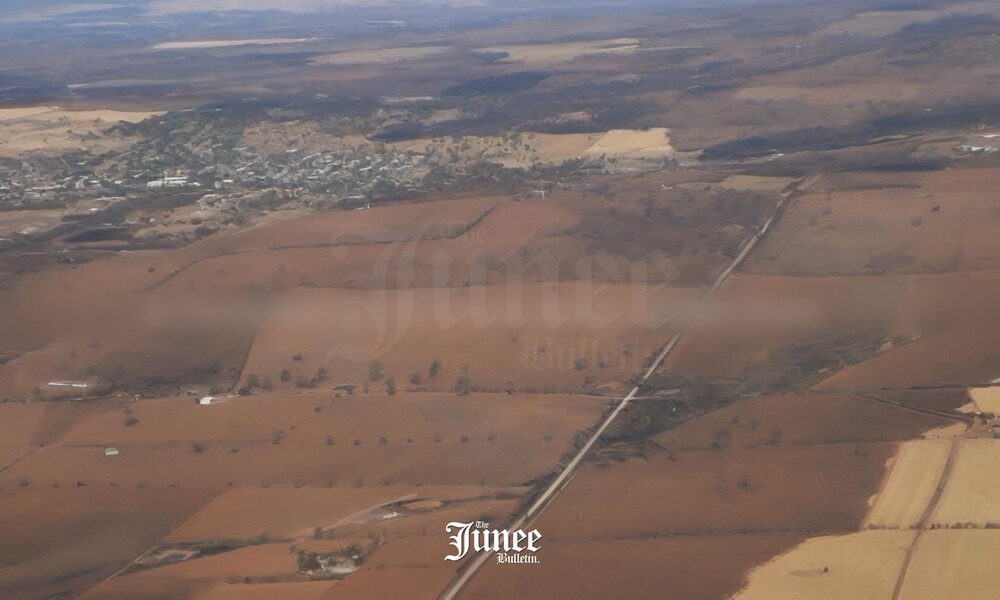
The blaze began in long, dry grass on the eastern side of the Goldfields Way, about 8km west of the Junee township, before moving into dry lucerne paddocks primed to carry flame.
It was later determined the fire was likely sparked by a lit cigarette thrown from the window of a passing vehicle.
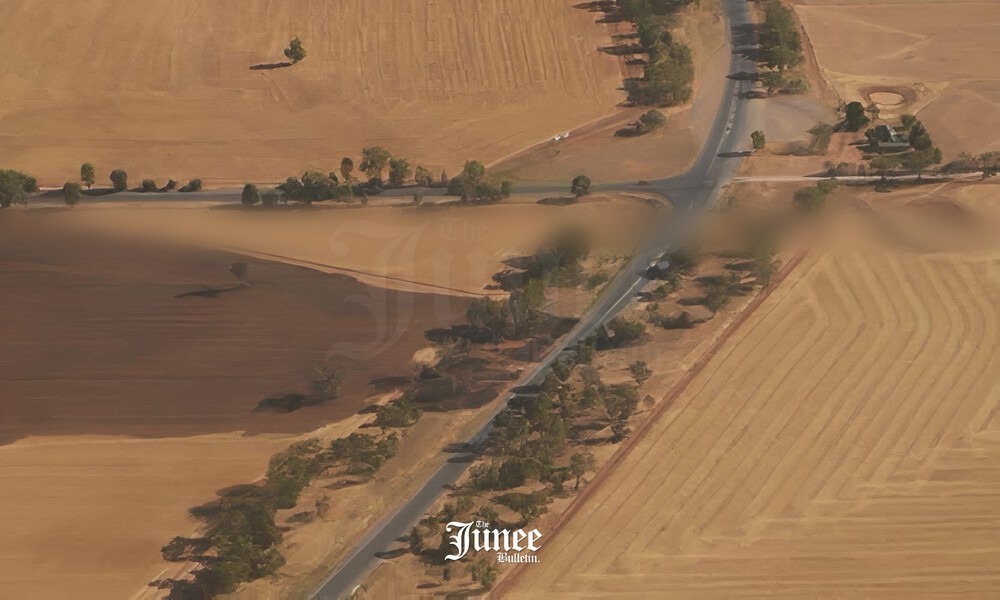
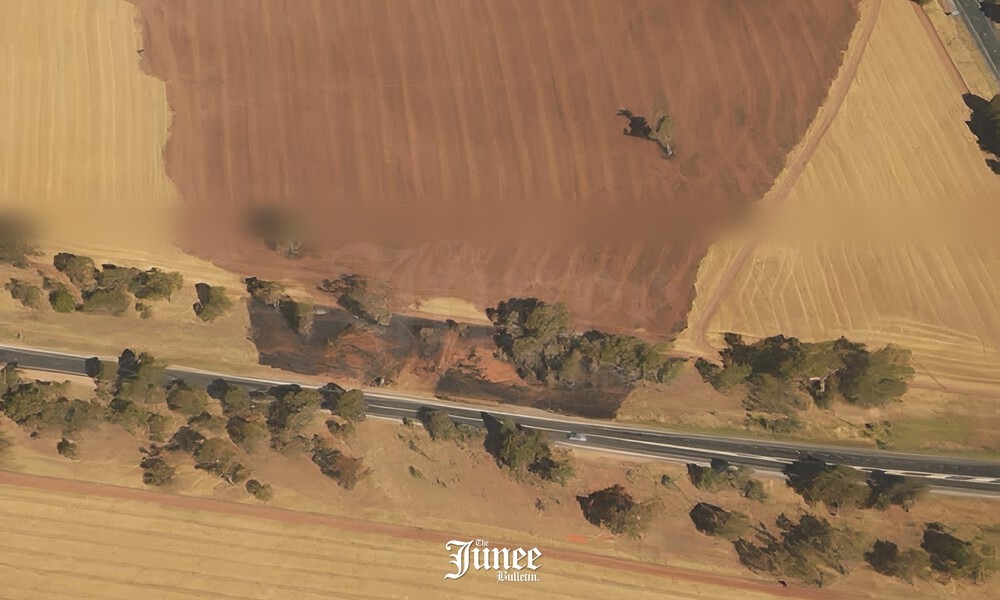
Local brigades were paged immediately. Crews from Yathella, Old Junee, Marrar and Junee Headquarters responded within minutes, but holding the fire proved impossible.
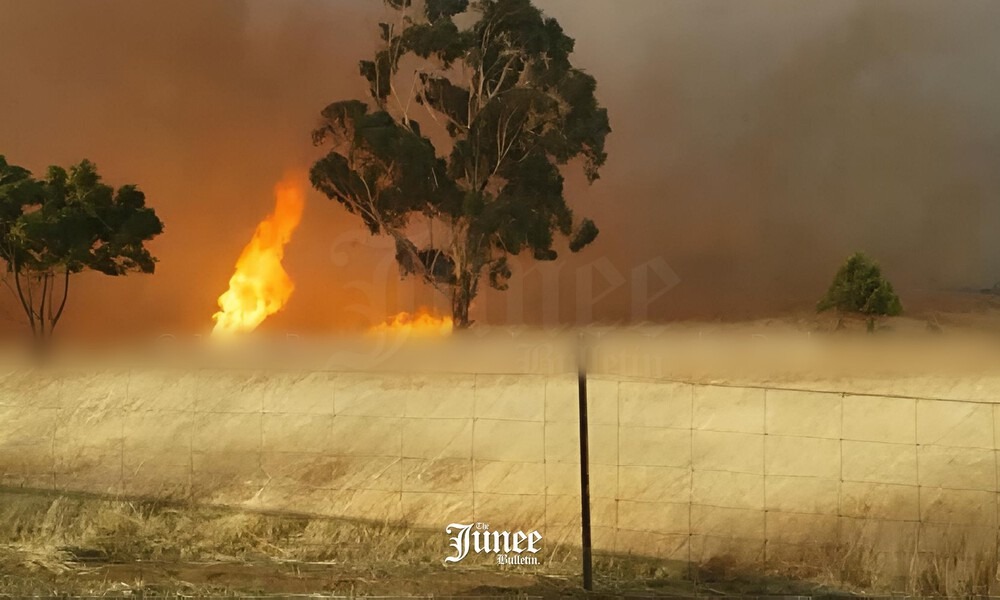
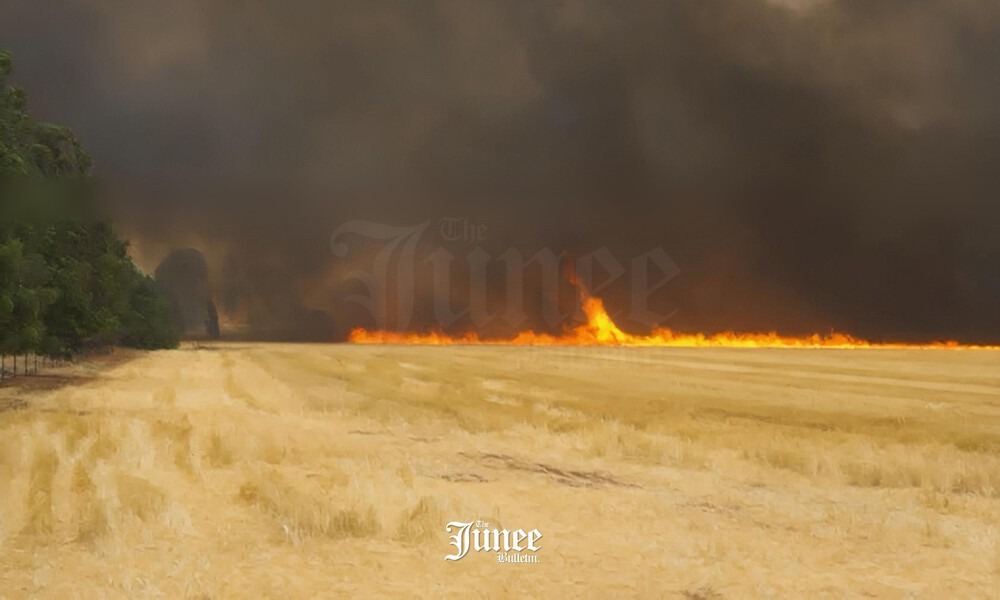
Driven by wind and extreme heat, the fire front bore down on Junee with terrifying speed.
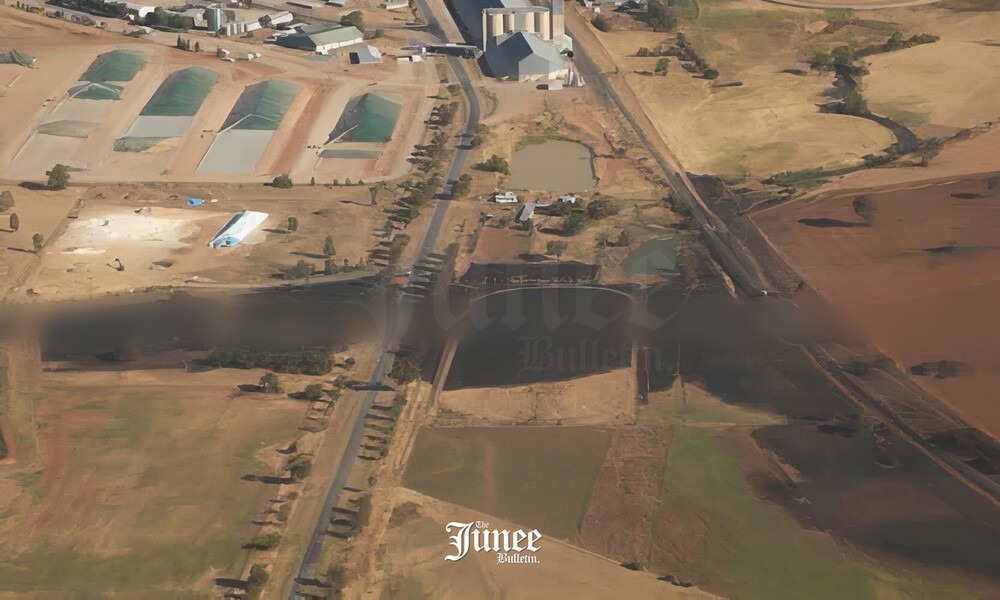
It jumped containment lines, crossed the Olympic Highway — known locally as the “Mad Mile” — and surged eastward, gathering momentum as it raced through farmland toward the outskirts of town.
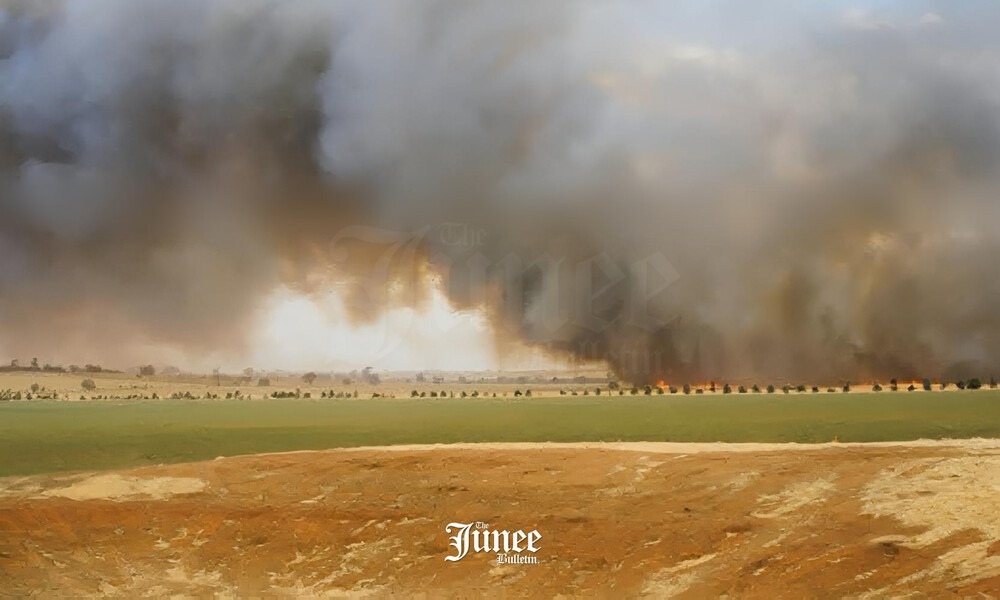
The fire did not discriminate — it burned through small holdings and large farms alike, leapt roads, and moved faster than people could outrun it.
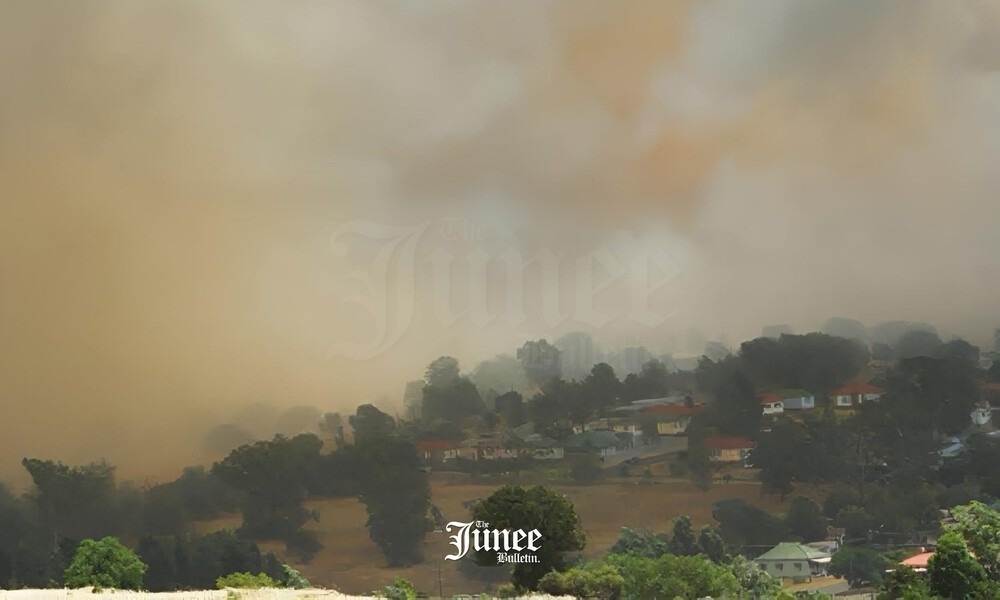
By 2pm, smoke was choking Junee as the fire impacted the town’s western fringes.
It was during this period that the greatest damage occurred, and the strategy shifted from containment to survival.
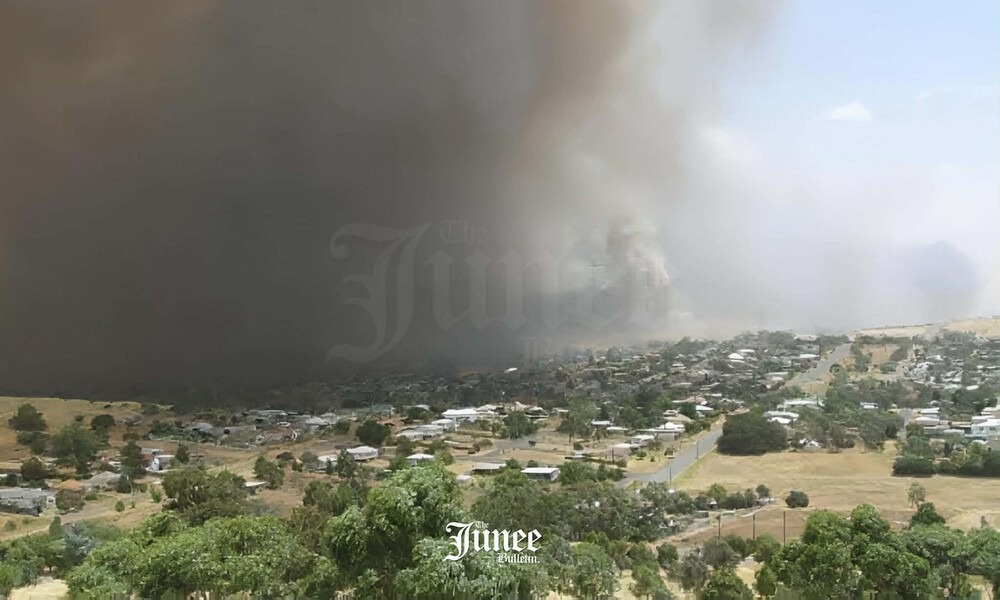
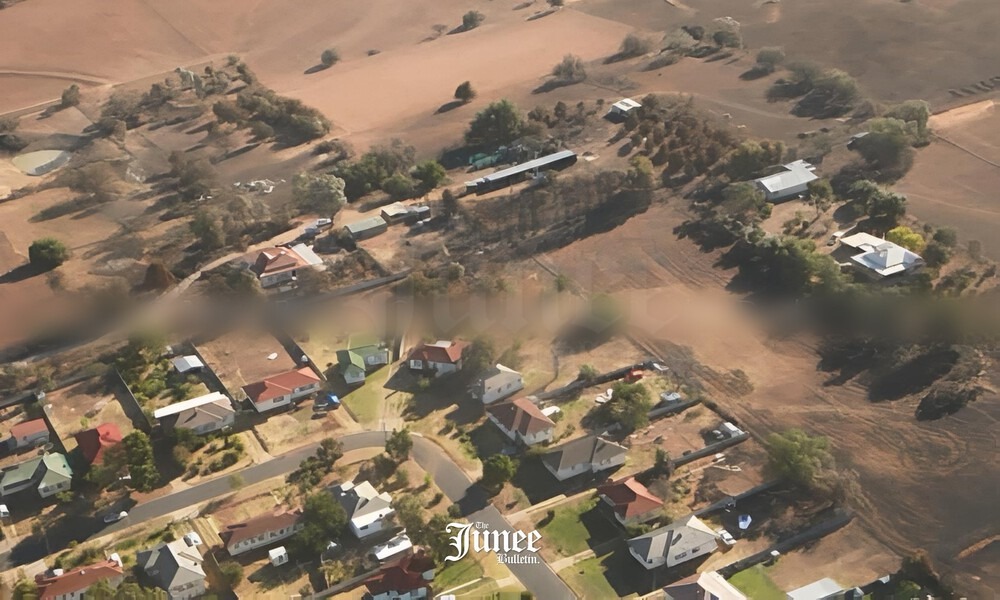
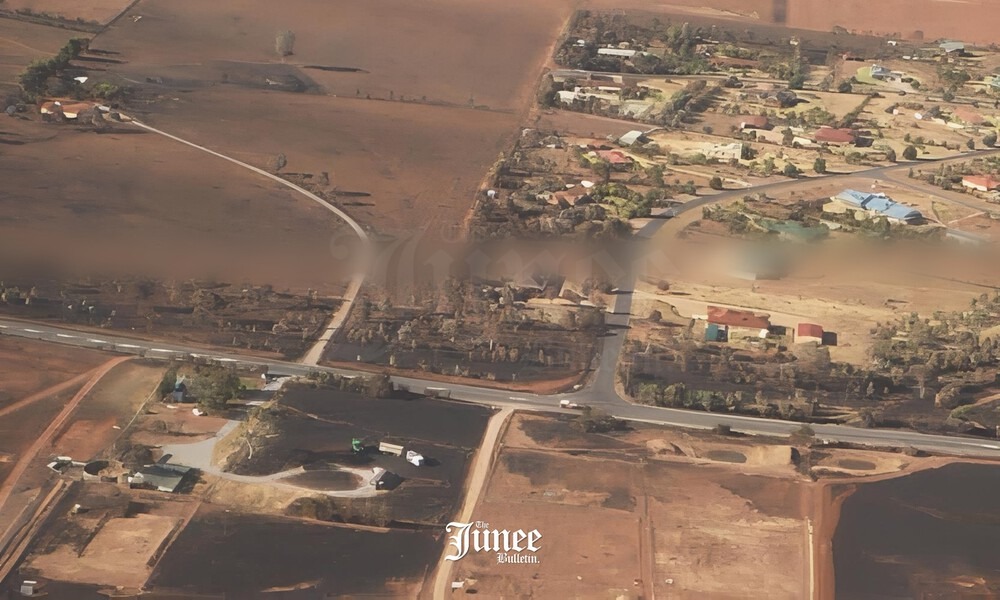
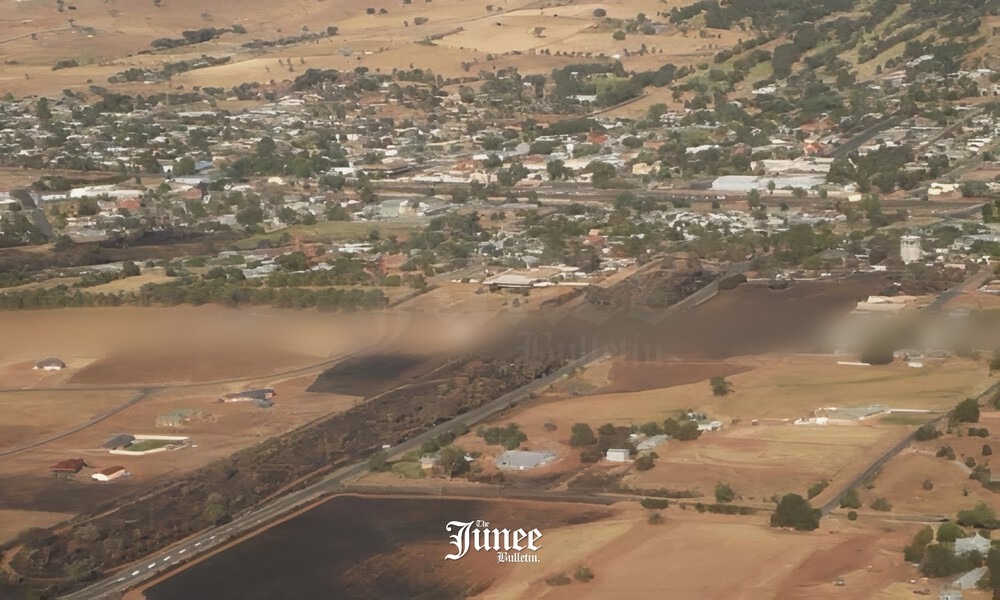
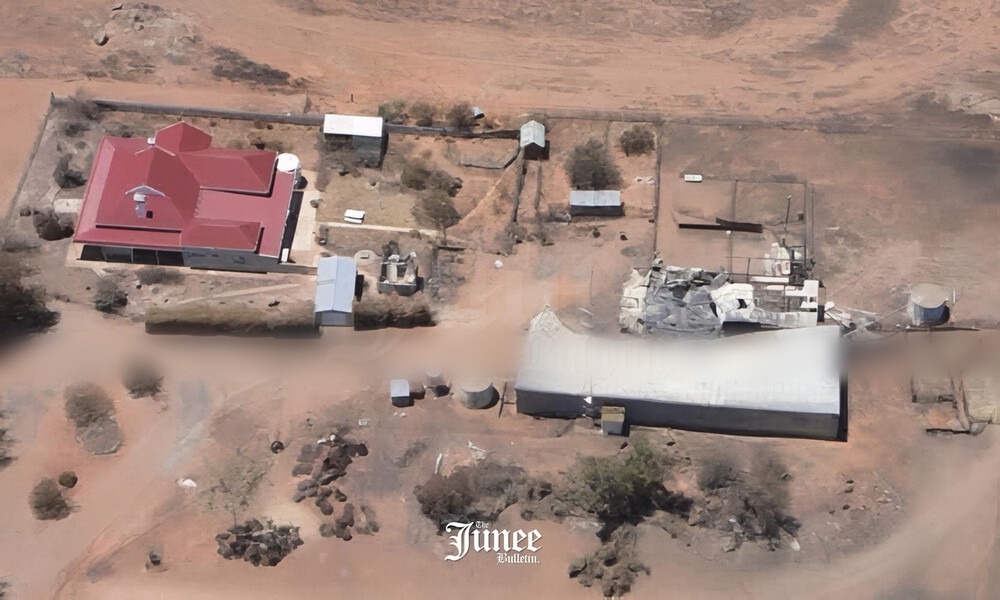
Ten homes were destroyed. Four shearing sheds were lost. Approximately 20,000 sheep and 100 cattle perished.
Around 1,500 kilometres of fencing were damaged or destroyed.
Silage, hay, headers and unharvested crops were wiped out in minutes.
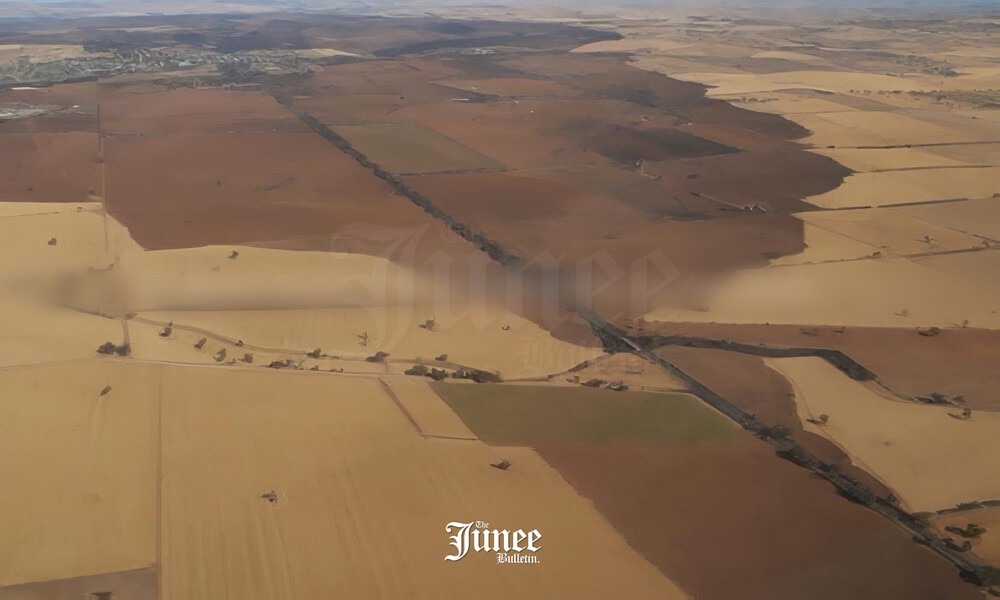
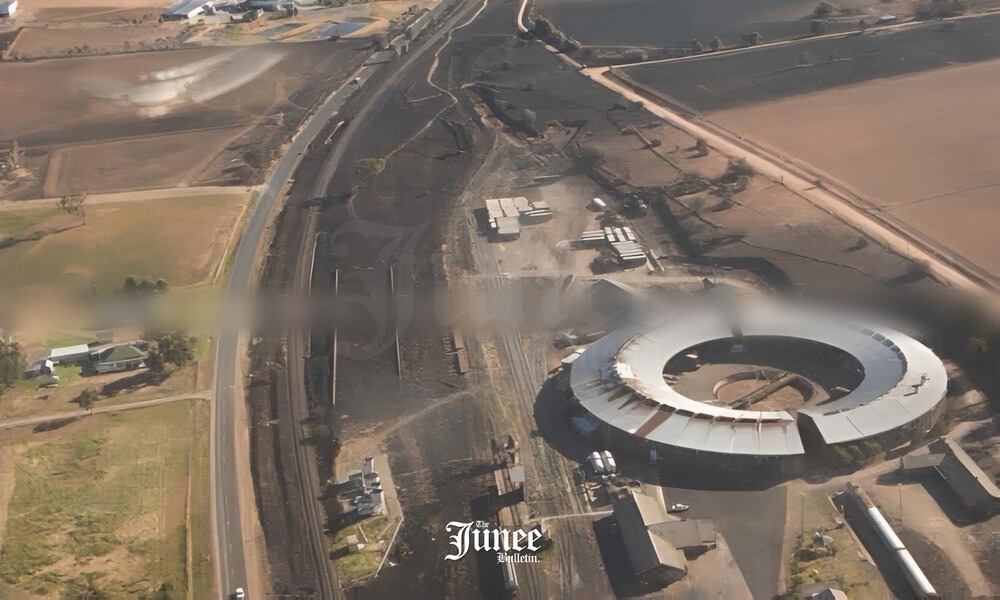
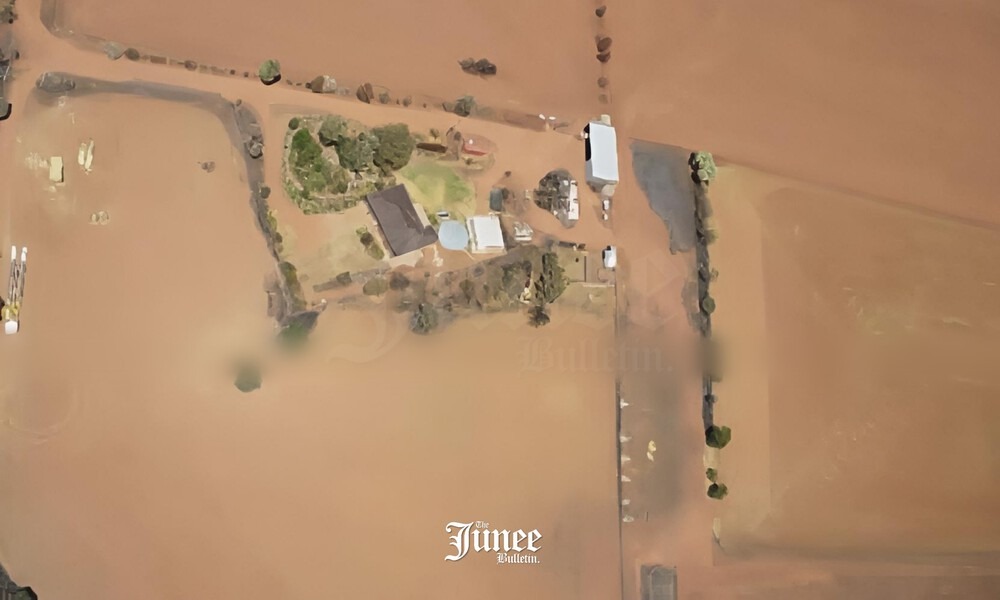
Photo: Junee Burns 2006
A fire that would not be stopped
At 3.40pm, a Section 44 declaration was made for the Junee Shire, placing the fire under state-level control.
Riverina Zone Manager Superintendent Joe Knox was appointed Incident Controller, overseeing a rapidly escalating emergency that would stretch resources across much of southern New South Wales.
Superintendent Knox recalled the first few hours of the emergency in a detailed recount published in the official journal of the NSW Rural Fire Service in 2006:
“The fire travelled quickly to the east engulfing farmland, threatening homesteads and the township of Junee. At about 1400hr and for some time after, the fire impacted on the Junee township.
The Incident Management Team (IMT) scaled up and a range of strategies were taken into account. At this stage, the main strategy was the protection of life and property. Various control lines were considered during the fire, with the first being Harefield Road, though responding tankers were unable to reach the area before impact.”
Under siege: A race lost, a town threatened
Among those caught in the fire’s path were John and Judy Gentle, whose carefully managed farm lay between the fire’s point of origin and the town.
Their story, documented by Australian Rural Doctor journalist Melissa Sweet in April 2006, speaks to both preparedness and helplessness.
The Gentles were experienced and vigilant. They never holidayed in summer and had worked their land carefully to minimise fire risk. But nothing could prepare them for what was coming.
Melissa Sweet recounted the moment in detail in her 2006 feature, published four months after the fire:
“After John left to fight the fire, Judy lost all track of time. She was on autopilot as she moved cattle and did what else needed to be done. As huge dark clouds rolled across the paddocks towards the house, she could not believe what was happening.
Judy, 59, had seen fires before, but never anything like this. She retreated indoors. Meanwhile, John’s foot was flat to the floor as he drove through dry stubble paddocks, in a desperate effort to beat the fire back to his place. He was travelling fast, but the fire was faster.”
The Bureau of Meteorology would later record a maximum temperature of 44.6°C at nearby Wagga Airport that afternoon, with winds gusting up to 50km/h. Conditions at the fire front were even more extreme.
When John returned home, spot fires were already breaking out around the house. The shipping container where farm supplies were stored — believed to be safe — was burning. Inside were irreplaceable items, including a childhood train set John had owned for more than 50 years.
When Judy finally evacuated, she grabbed only her handbag and the dog. She did not think to take photographs or keepsakes. On the way out, she saw the first of their dead cows.
Nearby, Margaret and Doug Wright were also fleeing.
One residence had already been lost on the crest of a hill on Junee’s western fringes when Margaret, aged 62 at the time, carefully locked the back door of the home she had lived in for 38 years, never imagining it would be gone minutes later.
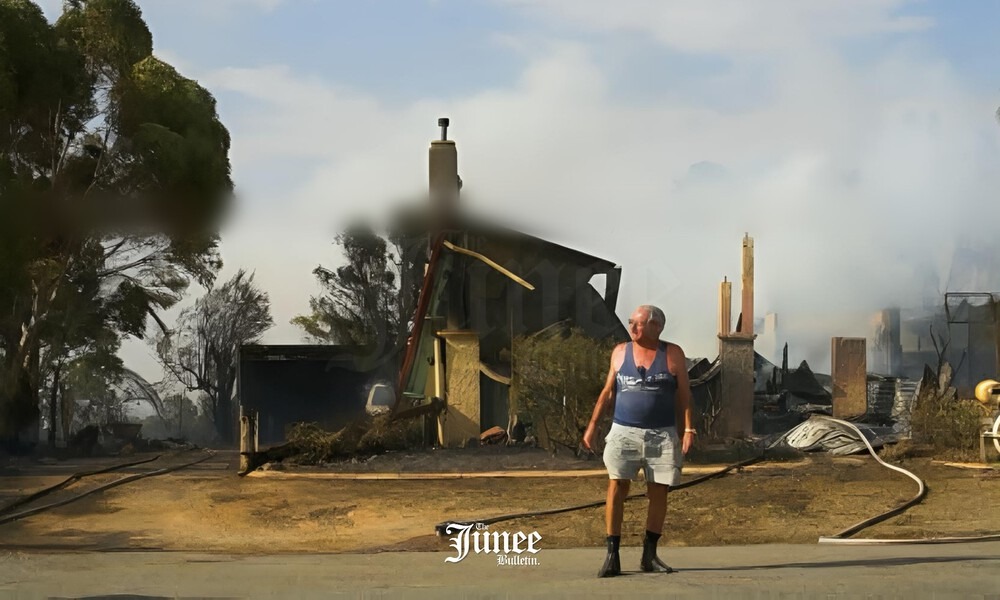
As Sweet recounted, Margaret left with only a basket of freshly washed clothes, her handbag and the dog.
By the time flames consumed the house, everything had been lost — pets, heirlooms, and the accumulated memories of a lifetime.
Only a plastic container of clothes pegs survived intact.
Doug, aged 63 and already suffering emphysema, would spend much of the following month in hospital, grappling not only with physical illness but the emotional weight of being unable to defend his home.
A town holds its breath
As the fire encircled Junee, rumours spread faster than facts. Thick smoke reduced visibility to metres. Power and phone lines failed. Roads clogged with fire appliances, farm vehicles and onlookers who hampered emergency access.
One fear struck particularly deep — that Monte Cristo Homestead, the town’s most iconic historic landmark, had been lost.
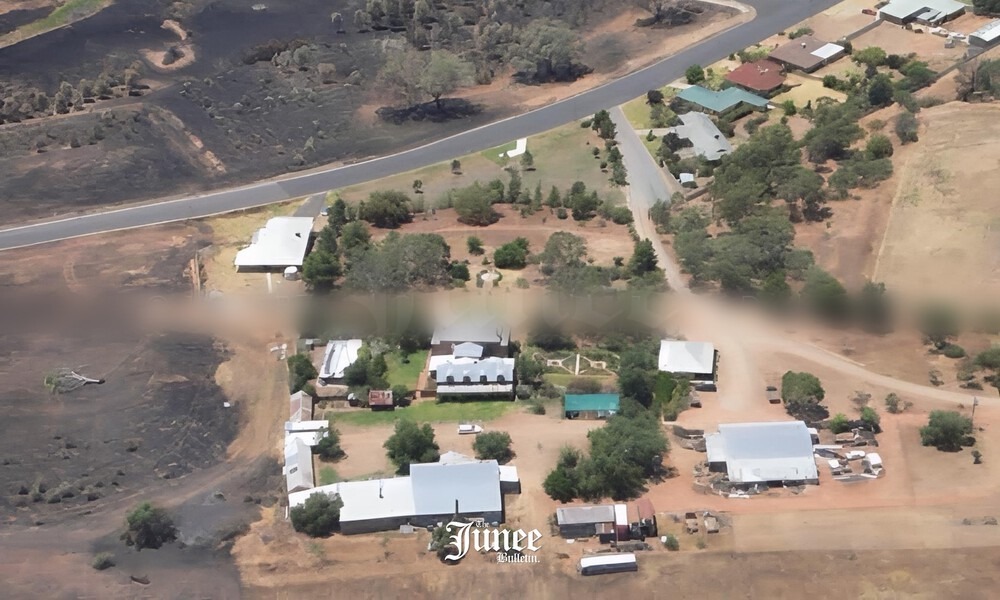
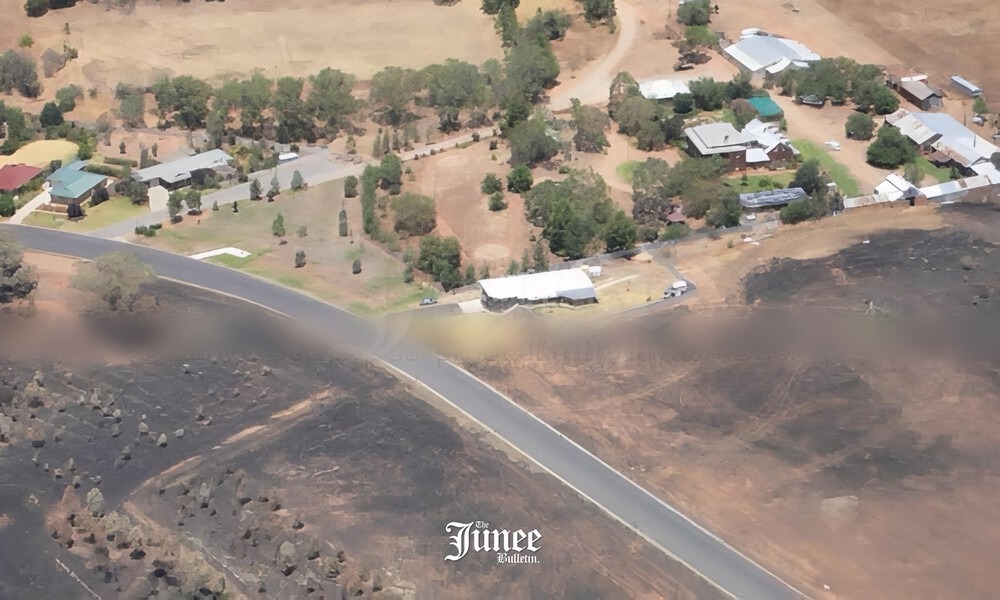
The late Reg and Olive Ryan had spent more than 40 years restoring the grand 1884 homestead after buying it as a derelict shell in 1963. It was both their home and a private museum, housing a priceless collection of antiques.
Insurance was unaffordable. If it burned, everything would be lost.
“The smoke was so thick and dark that Reg, 72, didn’t see the flames until they were only metres from the wooden shed housing his huge collection of drays and buggies. As friends and family rallied with buckets and hoses, Reg was sure his life’s work would be lost.”
Inside the house, Olive, 75, sat with grandchildren, preparing for the worst.
Then, at the critical moment, a helicopter pilot spotted the threat. A precisely placed water drop knocked down the advancing fire, drenching firefighters and breaking its momentum.
Monte Cristo was saved, with minutes to spare.
The hospital without power
Across town, another battle was unfolding.
Junee Hospital, with limited emergency capacity, was suddenly inundated.
According to Australian Rural Doctor, power failed early in the crisis and there were no backup generators, leaving staff without lighting or air conditioning.
Health service manager Gail Lynch arrived shortly after 3pm to scenes of chaos.
Communications failed. Confusion reigned as doctors treated patients in corridors illuminated by natural light while smoke thickened outside.
A triage was established in the boardroom. Patients arrived with smoke inhalation, eye injuries, burns, asthma attacks and dehydration.
One firefighter collapsed from dehydration. Elderly residents required oxygen, and wet towels were applied to aged-care residents as temperatures inside climbed.
Staff also arrived unprompted, some leaving homes under threat to help others. Later, many would refuse to accept payment for their work.
And then came the most serious case of all.
A young man’s fight for life
One of the most confronting legacies of that afternoon is the story of John Heffernan, a 21-year-old local who suffered severe burns to 80 per cent of his body after being overrun by the firestorm while working in a tractor on the family farm.
When John reached Junee Hospital, he did not arrive unconscious or carried in. He walked in, gravely injured.
When Dr Darren Corbett arrived soon afterwards, he found John standing in the shower, calmly describing what had happened to Dr Saad Saad and hospital staff.
Despite excruciating injuries, Dr Corbett later said he did not hear a word of complaint, describing John as one of the toughest patients he had ever treated in an interview with Australian Rural Doctor in April 2006.
Doctors worked under extraordinary constraints.
As John’s injuries were assessed, staff began the painstaking work of stabilising a major burns patient in a small regional hospital during a fast-moving emergency.
Over the next hours, the scale of the trauma became clearer. John required aggressive fluid resuscitation and pain relief.
With no power and limited resources, doctors administered 11 litres of fluid and 150mg of morphine as they worked to keep him alive and arrange an urgent transfer.
But getting him out of Junee was not straightforward. The evacuation effort was plagued by delays.
A helicopter failed to arrive due to mechanical issues, and an ambulance was slow to reach the hospital, with surrounding roads bordered by unpredictable fire behaviour.
Meanwhile, Dr Corbett continued treating John under difficult conditions, hampered by the lack of power and the challenge of securing intravenous access in a major burns patient.
He later noted a practical lesson borne from chaos and urgency: with burns victims, drips need to be stitched in, otherwise swelling and dressings can dislodge the line.
Throughout it all, John remained conscious and coherent.
Finally — more than two hours after arriving at the hospital — he was transported to Wagga Base Hospital under police escort, with Dr Corbett accompanying him in the ambulance.
At Wagga, John underwent emergency surgery to relieve constricting burned tissue on his arm and chest and restore circulation.
He was later flown to Concord Hospital to begin a long and painful recovery.
Back in Junee, as the fire front continued to threaten lives and homes, the local hospital kept filling.
Dr Corbett returned to find an ongoing stream of patients, many suffering smoke inhalation and injuries caused not only by flames, but by the conditions themselves — including a surprising number of people with burns to the cornea from ash and heat-driven debris.
Pushed to the edge
Outside, firefighters faced burnovers, exhaustion and fear.
As recounted by Australian Rural Doctor in the months following the fire, crews led by Stuart Dietrich endured moments they later believed they would not survive.
“More than once, the rural firefighting team led by Stuart Dietrich had waited agonising moments, with the sprays pumping protection on the men on the back of the truck, as the fire passed over them.
Dietrich, 30, thought that he and his men were goners. His truck had been among the first to reach the blaze on the Mad Mile, and he had lost count of how many homes they were called to that day — it could have been 35 or 40.”
Fire on every horizon
By late afternoon, a long-anticipated wind change arrived. Gusts strengthened and shifted the fire northward, sending it towards Illabo, Bethungra and the Mt Ulandra Nature Reserve. Aircraft were temporarily grounded due to dangerous flying conditions.
But despite the chaos, firefighters were ready, as Superintendent Knox recalled in his 2006 report:
“Previously hazard-reduced areas between Junee and Illabo on the main southern rail line proved invaluable and resulted in only one major spot-over on this northern flank.
At about 1640hr, a front moved into the area from the west which increased wind speeds and shifted the wind direction 45 degrees towards the north. This change had been expected and firefighters were prepared.
As a consequence, some areas — particularly to the west of Junee — experienced little impact. However, the front and eastern areas witnessed increased fire activity from a larger front.”
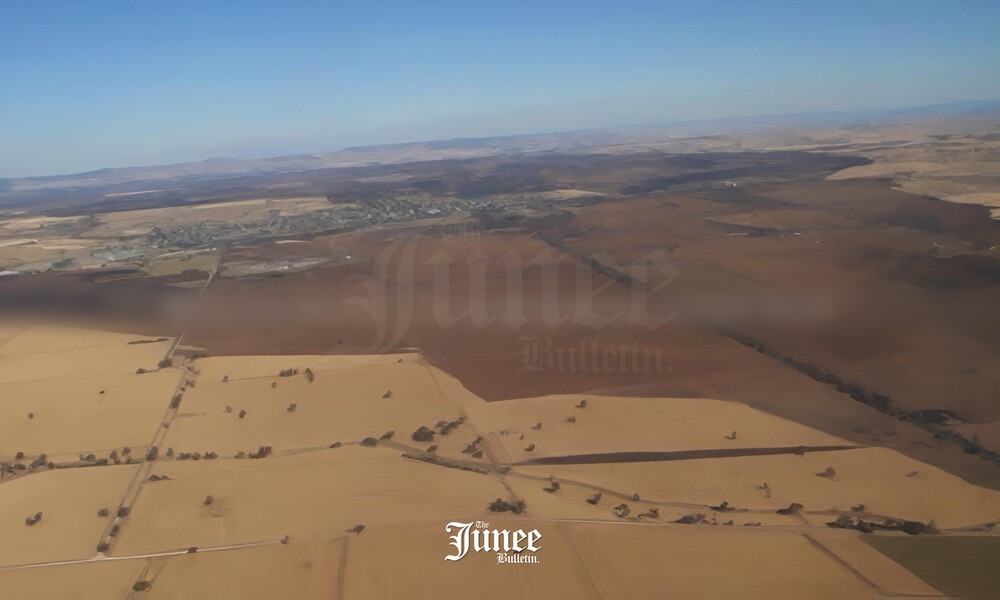
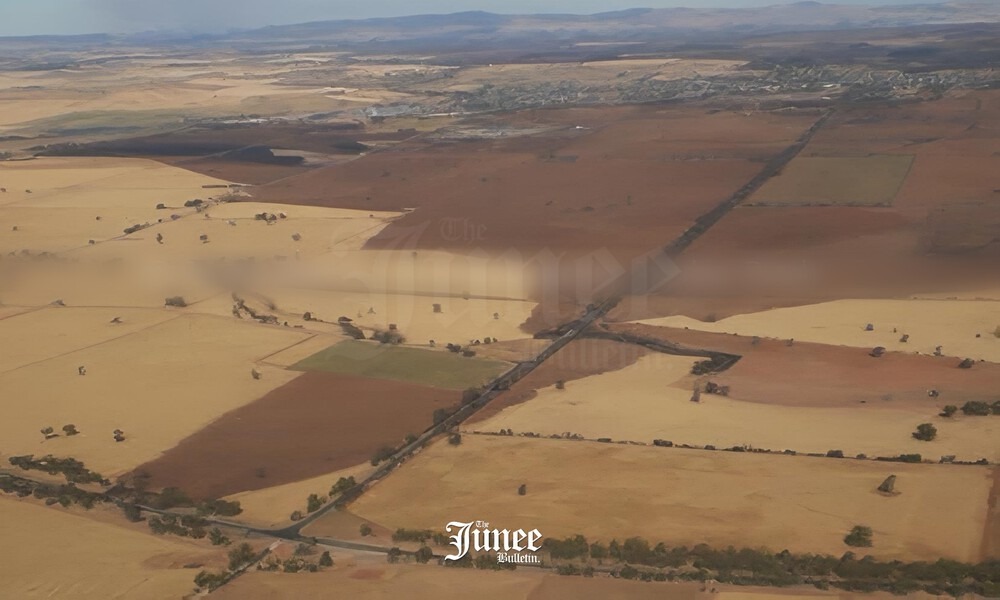
By nightfall, the fire’s forward run had finally slowed, having travelled almost 38 kilometres from its point of origin.
Throughout the night, crews patrolled containment lines while another fire ignited south of the main front at Eringoarrah, burning a further 1,200 hectares.
Miraculously, no lives had been lost.
Days of containment, years of recovery
Over the following days, cooler conditions allowed containment lines to be strengthened and backburning operations to protect remaining assets.
Heavy machinery cut new lines. Aerial surveillance identified hotspots. Fire investigators began examining the cause.
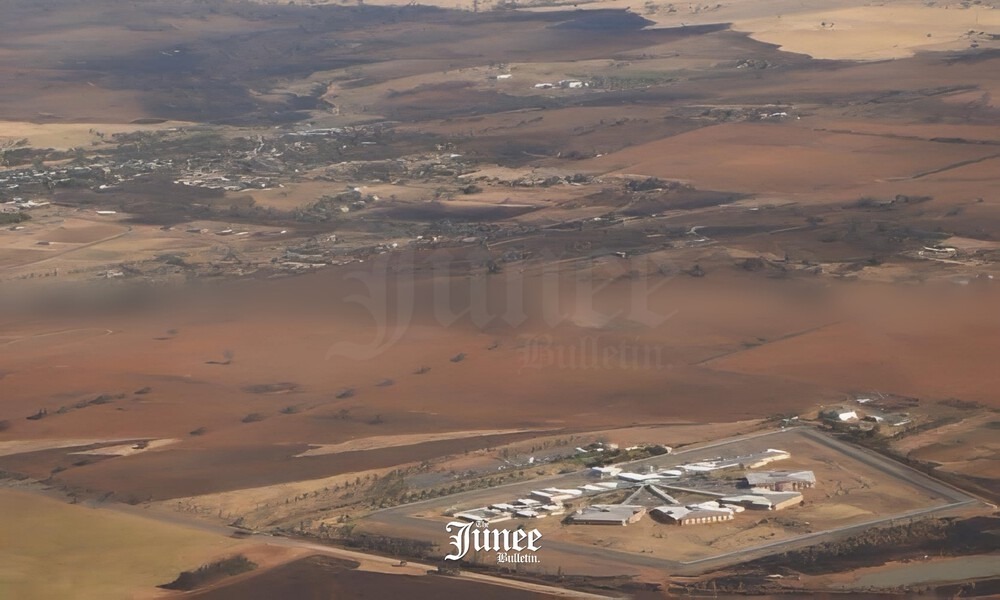
As ABC News reported on January 2, RFS commander Joe Knox praised the “tremendous effort” of volunteers from across the region, while farmers described it as the worst fire they had ever seen.
While the Section 44 declaration was lifted on January 6, the fire would not officially be declared out until January 17.
In total, more than 25,000 hectares burned. Ten homes were destroyed. Twenty thousand sheep and 100 cattle were lost. Some 660 firefighters, supported by aircraft, heavy plant and volunteers from across NSW, had battled the blaze.
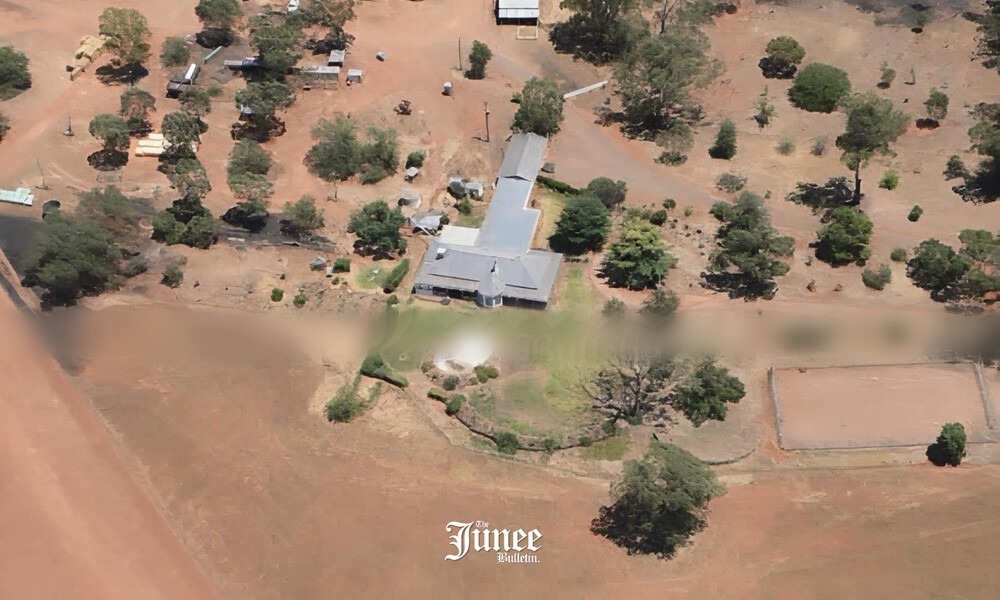
IN NUMBERS
- 25,200 ha burnt
- Approx. 200 properties affected
- 4 occupied houses destroyed
- 6 vacant houses destroyed
- 4 shearing sheds destroyed
- Approx. 20,000 sheep killed
- Approx. 100 cattle killed
- Approx. 1500 km fencing damaged
- 20ha unharvested crop burned
- 660 firefighters
- 116 tankers
- 24 support vehicles
- 9 heavy plant
- 5 helicopters
- 5 fixed wing aircraft
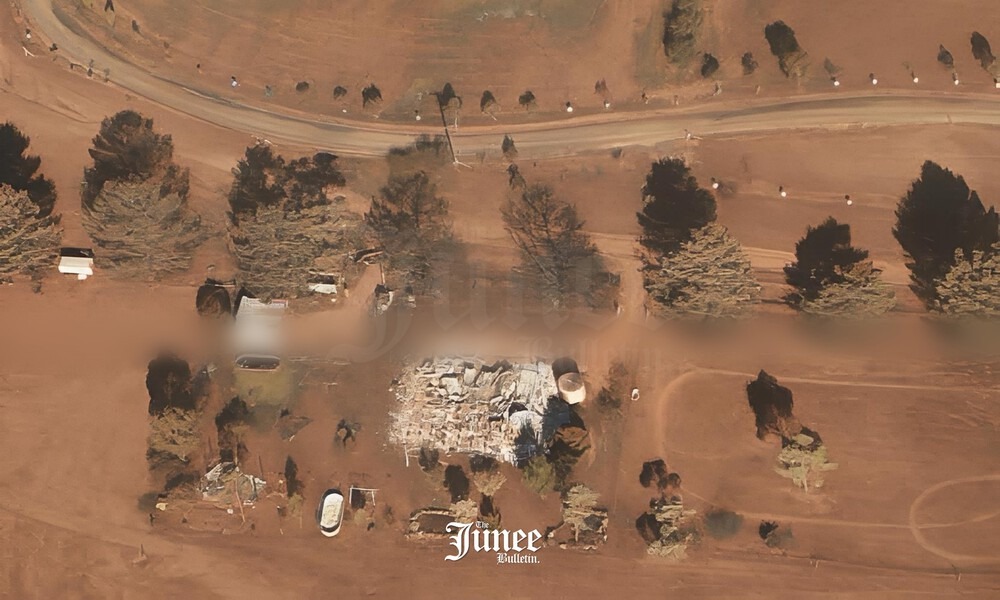
What followed was a slower, quieter struggle.
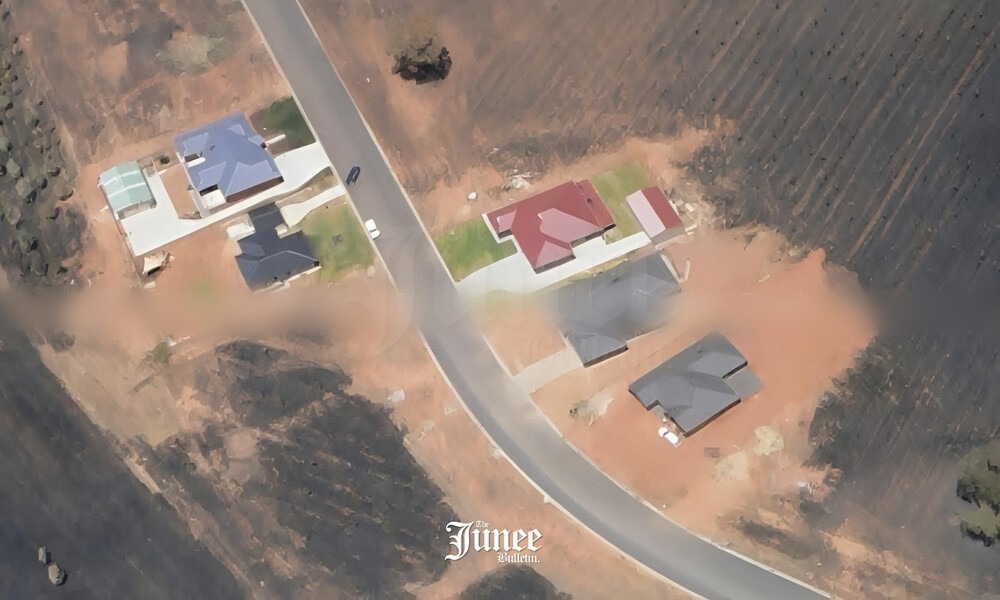
Recovery was slow and uneven. Insurance rarely covered the true cost. Many families faced rebuilding with little support. Emotional scars lingered. Doctors, counsellors and neighbours stepped in where systems fell short.
Melissa Sweet visited Junee in the months following the fire and wrote:
“For weeks after that dreadful day, the talk everywhere was of fire. Many felt the need to return to it over and over. One woman vented her anger at seeing a butt thrown from a car in town on the night of the fire. Others found their losses too painful to discuss.
Grief, anger, anxiety, relief and guilt were among the mixed emotions stirring the town. Many firefighters were grappling with the after-effects of close shaves. Some had been trapped in their trucks as fire passed over. One man had collapsed in tears in his vehicle, overwhelmed by fatigue, the fire’s intensity and the hopelessness of their efforts.
For some farmers, already worn down by years of drought, the blaze seemed like the final straw.”
Yet alongside loss came extraordinary generosity. Anonymous donations. Hay convoys from strangers. Neighbours who became family.
What remains, 20 years on
Junee has faced major fires before, but the Jail Break Inn fire remains the last major one to threaten the shire.
Twenty years later, fences have been rebuilt and new homes stand where ashes once lay.
But for those who lived it — who smelled the smoke, felt the heat, and watched the sky turn black — New Year’s Day will always carry a different meaning.
It is remembered not just as the day fire came for Junee, but as the day Junee stood together — and endured.
Author’s note:
I was 14 years old on New Year’s Day, 2006.
I was living on the northern edge of town with my father, and like many families that afternoon, ours was split in two — those who stayed behind, and those who left to fight the fire. My father was among the many local men who went out. It was a terrifying few hours, as power was lost, communications failed and the skies darkened as the smoke thickened.
One of the most vivid memories I have of that day is of my father returning home later that afternoon, blackened with singed hair.
I also recall walking to the top of the hill on my grandfather’s property behind our house and looking back over Junee to see the town peppered with flashing lights and outlined with pockets of fire. It is an image that has never left me.
That day sparked something that has stayed with me ever since.
I became deeply aware of how vital accurate, timely information is during emergencies — and how communities rely on it. It was the moment that ignited my passion for sharing news and critical updates, a passion that would ultimately shape my career and my ongoing commitment to this community.
In the aftermath, I also helped produce a DVD documenting the fire and its impact, raising funds for the local Mayoral Bushfire Appeal. It was a small contribution, but one driven by the same instinct that guides my work today — to inform, to document, and to serve the place I call home.
Twenty years on, this story matters to me not only as a journalist, but as someone who lived it alongside this community. This feature is written with deep respect for those who lost homes, livelihoods and places they loved — and for the firefighters, volunteers and families who stood together when Junee was pushed to the brink.
— Jaydan Duck
Editor, The Junee Bulletin








Man resuscitated after cardiac arrest at Junee sports field

Pam Halliburton elected Junee mayor in historic changing of guard


