
Riverina
Born in a tent: Newborn’s death exposes homelessness crisis

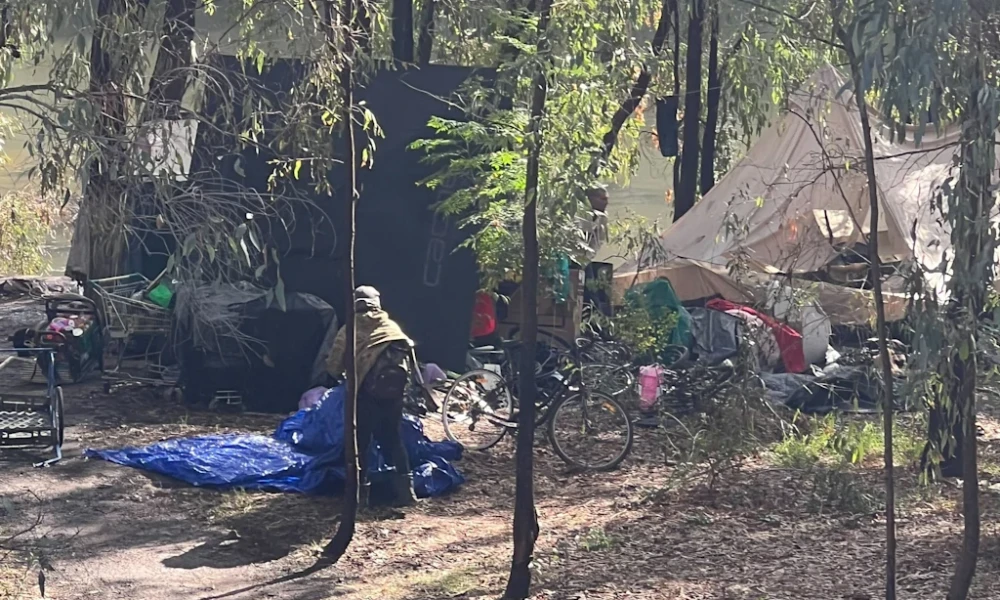
POLICE say the death of a baby delivered inside a tent on the banks of the Murrumbidgee River in Wagga is not being treated as suspicious, as the tragedy places renewed focus on the city’s worsening homelessness crisis.
New details made public on Monday revealed the infant was one of two babies delivered prematurely inside a tent on the riverbank, just 300 metres from Wagga Police Station on Saturday, May 2.
Police were responding to reports of a concern for welfare when they made the discovery along the river behind Cadell Place, near Wagga Beach, about 4.20pm.
Officers attached to the Riverina Police District attended the scene and located a 37-year-old woman who had just given birth to twins prematurely.
One of the infants was deceased. The second, a baby boy, was rushed by ambulance to Wagga Base Hospital in a critical condition.
The woman, who is believed to have been living in the tent during her pregnancy, was also transported to hospital.
A crime scene was established as part of standard procedure, with police launching an investigation into the circumstances surrounding the incident.
In an update on Monday, police confirmed the infant’s death was not being treated as suspicious. A report will be prepared for the Coroner.
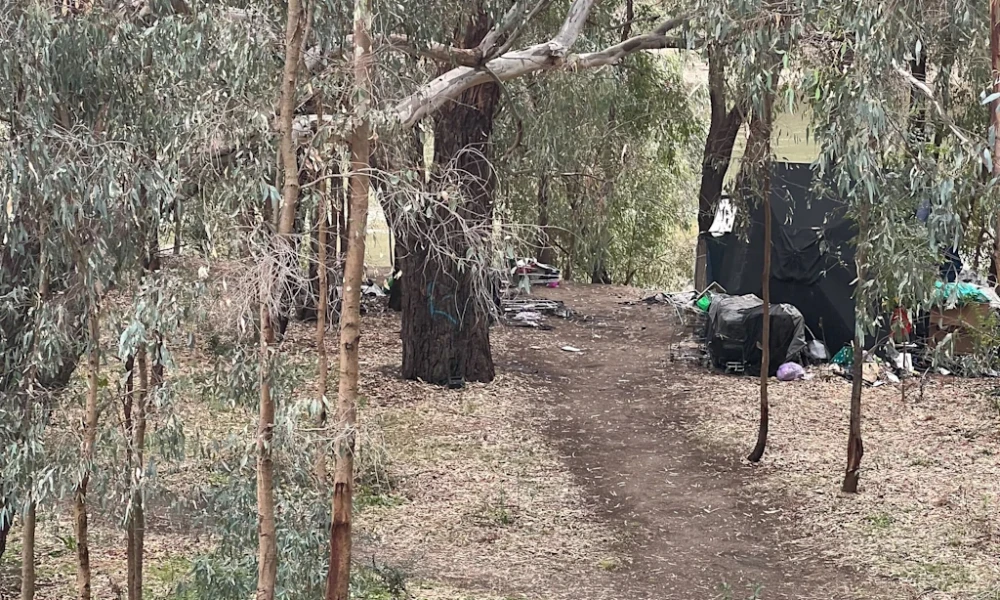
Tents pictured by the Murrumbidgee River in Wagga on Monday, May 4, 2026 | Image: Richard Foley
The tragedy has triggered an outpouring of grief, anger and disbelief across the Riverina, with hundreds of residents taking aim at Wagga’s housing crisis on social media and questioning whether enough was done to support the mother before Saturday’s emergency.
“How does it get to this before a welfare check gets called?” one woman asked.
“Did no one identify a pregnant woman homeless at the river for the last however many months? It’s devastating and shows just how poorly the government at all levels is dealing with homelessness.”
Another described the tragedy as “a terrible indictment of the housing situation for vulnerable members of our community”.
“No woman and her children should ever be in this situation in a country like Australia,” they said.
It is not known what agencies, if any, were aware the woman was living rough, or whether she had been receiving medical or welfare support.
Wagga City Council has denied it was aware of her circumstances before Saturday’s incident, despite reports residents had provided council with photos and videos in the weeks leading up to the tragedy, raising concerns for her welfare.
Council general manager Peter Thompson told The Daily Advertiser responsibility for the welfare of people sleeping rough did not sit directly with council, even where makeshift shelters had been established on land it owned or managed.
He said council could not simply move people on without legal authority, and any forced relocation would require court orders and police involvement.
But even then, Mr Thompson said the larger issue was not enforcement, but the lack of somewhere safe for people to go.
He said any long-term solution depended on the NSW Government providing alternative accommodation, with council continuing to work with state agencies on the issue.
Independent Member for Wagga Joe McGirr has called for urgent talks with NSW Housing Minister Rose Jackson in the wake of the incident.
The case has drawn national media attention since news first broke on Sunday morning, placing fresh scrutiny on Wagga’s long-running homelessness crisis and the growing number of people — including women and children — living in tents, cars and makeshift camps along the Murrumbidgee River.
Wilks Park in North Wagga has been at the centre of the issue for years.
The free camping ground allows a maximum stay of 72 hours and is restricted to self-contained recreational vehicles, with tents not permitted.
But despite those rules, and repeated attempts to enforce them, the site has become a long-term refuge for people with nowhere else to go.
Similar communities of rough sleepers have also become increasingly visible along the river upstream and downstream of the city, including at Oura Beach, which residents have described as a “second Wilks Park”.
Speaking to The Sydney Morning Herald on Monday, Wagga councillor Richard Foley said Saturday’s “terrible tragedy” was the direct and predictable result of systemic failure to address the issue, which he said was “getting much, much worse”.
“It’s ridiculous and people have nowhere to go,” he said.
“Some members of the community just want us to go in there and remove them … but that’s not going to solve anything, it’s only going to push the problem somewhere else.”
Wagga City Council has faced repeated pressure over Wilks Park, where attempts to enforce camping limits and move rough sleepers on have sparked public backlash, particularly during the height of winter in 2022 and amid earlier COVID-era exemptions.
Council has previously cited flood risks, complaints and safety concerns, while state agencies have pointed to offers of temporary accommodation and support.
However, residents living at the park at the time said that support often amounted to only a week’s accommodation before people were again left with nowhere to go.
The Riverina recorded a 14 per cent spike in homelessness over the past 12 months, making it one of the fastest-growing rural regions for rough sleeping, while local services say they are struggling to keep up.
National data released in July 2025 also showed a 20 per cent rise in homelessness across Australia, with women and children heavily represented.
The soaring cost of living, razor thin rental vacancies and a fresh wave of evictions has been blamed for pushing more people to the edge, with Vinnies reporting 25 per cent of those seeking support over the past year had done so after being evicted from their homes.
Cr Foley has been sounding the alarm about the issue for years, pointing primarily to a shortage of public housing, which falls under state government responsibility.
More than 400 people are currently on the waiting list for social housing in Wagga.
The NSW Government has identified the city as a priority area for social housing renewal, with Homes NSW working alongside the Aboriginal Housing Office, Wagga City Council and community housing providers on the redevelopment of the Tolland estate.
Homes NSW says much of its housing stock was built in the 1960s and 1970s, with maintenance costs rising and many properties becoming less suitable for tenants.
The first stage of the Tolland renewal project is expected to include the demolition of roads and infrastructure and the creation of 24 residential lots, with the broader project expected to deliver more than 400 homes over the next decade.
However, critics argue the work is not moving fast enough and that new construction will largely replace housing already lost.
“They say there’s action coming, but they keep telling us that,” Cr Foley told The Sydney Morning Herald.
In a separate interview on Monday, he said Wagga’s homelessness crisis had been “duck-shoved between bureaucracies” for too long, calling for immediate action from state and federal governments.
“State agencies, federal departments and yes, at times this very council have passed responsibility around while vulnerable people sleep rough on our riverbanks,” he said.
“This has been documented. This has been reported. This has been raised at council. And nothing adequate, in my opinion, has yet been done.
“Our Federal Government can find hundreds of billions of dollars for nuclear submarines. It cannot house and support its most vulnerable people. That is a moral obscenity.”
Years later, the central question remains unresolved: where are vulnerable people supposed to go when informal camps are cleared, and who takes responsibility when they fall through the cracks?
And how, in one of regional NSW’s largest cities, does a woman end up giving birth to twins in a tent on a riverbank, just hundreds of metres from the police station?
Support Services
If this story has raised concerns for you or someone you know, support is available.
- Lifeline Australia — 13 11 14 (24/7 crisis support)
- Beyond Blue — 1300 22 4636
- Kids Helpline — 1800 55 1800 (for people aged 5–25)
PANDA (Perinatal Anxiety & Depression Australia) provides free, confidential support for families affected by perinatal anxiety and depression. Services include a national helpline (1300 726 306), peer support, and resources for expectant/new parents during pregnancy and the first year after birth.
Housing and homelessness support is also available through Link2home on 1800 152 152, the NSW statewide homelessness information and referral service, available 24 hours a day, seven days a week.
People at risk of homelessness can also contact Mission Australia, Vinnies, or their nearest homelessness support service.
In an emergency, call Triple Zero (000)











Man resuscitated after cardiac arrest at Junee sports field

Pam Halliburton elected Junee mayor in historic changing of guard


