
Local
Spanning Generations: The storied history of Junee’s Kemp Street bridge


AS Junee prepares to farewell the iconic Kemp Street bridge this weekend, the community reflects on the structure that shaped the rhythm of local life for nearly 80 years.
Long before excavators and cranes moved in, this modest overpass carried more than just vehicles. It carried the weight of decades-long dreams, political pushback, and a town’s evolving identity.
The idea of bridging Junee’s east and west wasn’t new when work finally began during World War II. In fact, the town’s quest for a safer railway crossing dates all the way back to 1911.
That year, Railway Commissioner J. Johnson first floated the concept of an overhead structure spanning from Stewart Street to Seignior Street.
It was an ambitious £8000 proposal, with two-thirds of the cost to be covered by the Railway Department.
READ MORE: Demolition to begin Saturday morning
Despite support from then-Mayor W. J. Hiscock, Junee Municipal Council rejected the plan. The decision cast a long shadow over the town’s transport future.
For the next three decades, Junee remained split by its lifeblood — the main southern railway.
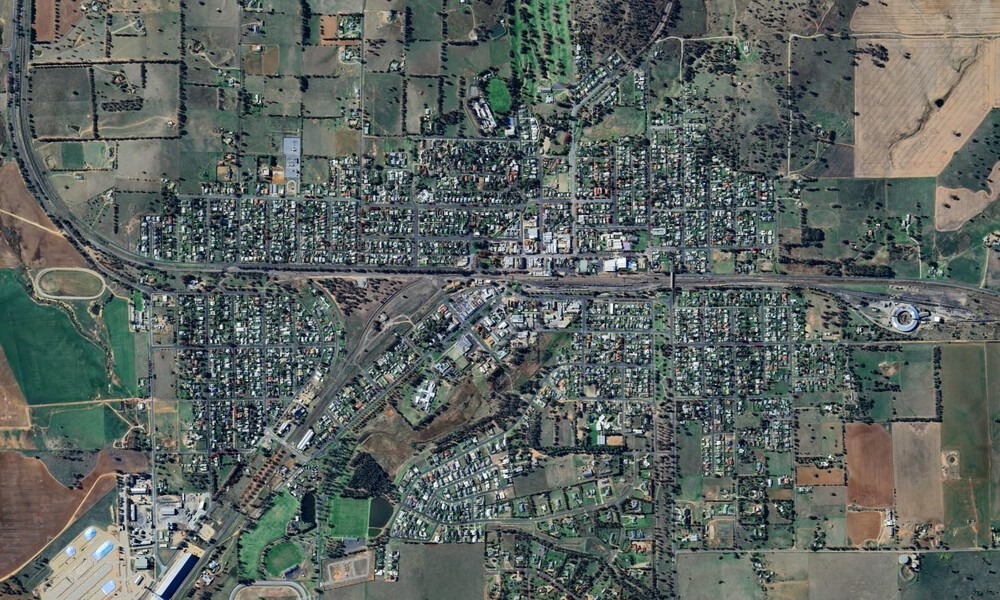
Photo: Google Maps
While the railways brought prosperity and purpose, they also imposed a daily gamble on residents forced to cross busy lines without grade separation.
It wasn’t until the early 1940s, as the war accelerated the need for modern infrastructure, that the vision for a bridge was finally revived.
On August 11, 1942, The Daily Advertiser published details of revised blueprints: a long, elevated traffic bridge to span the trunk line, designed to unite Kemp Street and George Street.
The initial plans envisioned a curved rise from Pretoria Avenue.
But in a practical compromise, engineers straightened the route to lift from the base of Kemp Street, arch over Edgar Street and Railway Parade, and touch down near George Street, narrowly avoiding the backyard of the Locomotive Hotel.
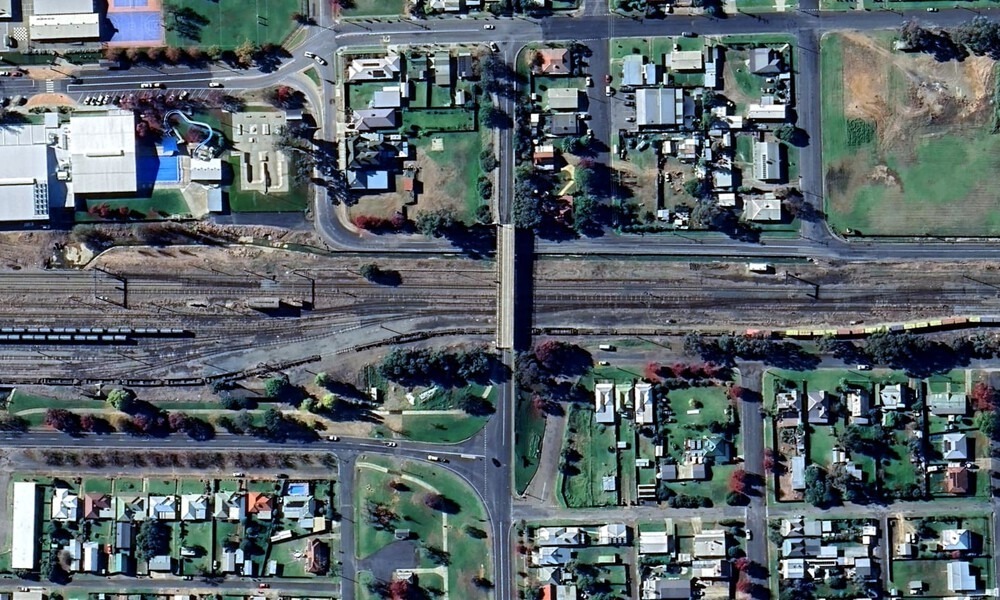
Photo: Google Maps
That decision came at a cost. Several homes and businesses, including a butcher and a bakery near Edgar Street, were resumed and demolished to make way for the approach.
The scars of this progress, both physical and emotional, marked a turning point in the town’s landscape.
By early 1945, the structure had begun to take shape.
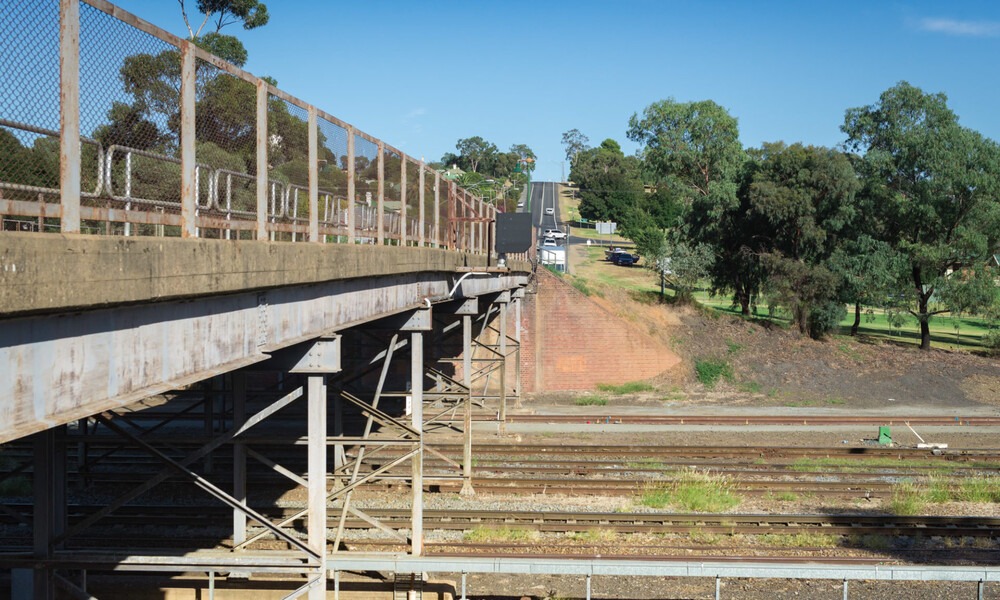
Photo: Supplied/Inland Rail
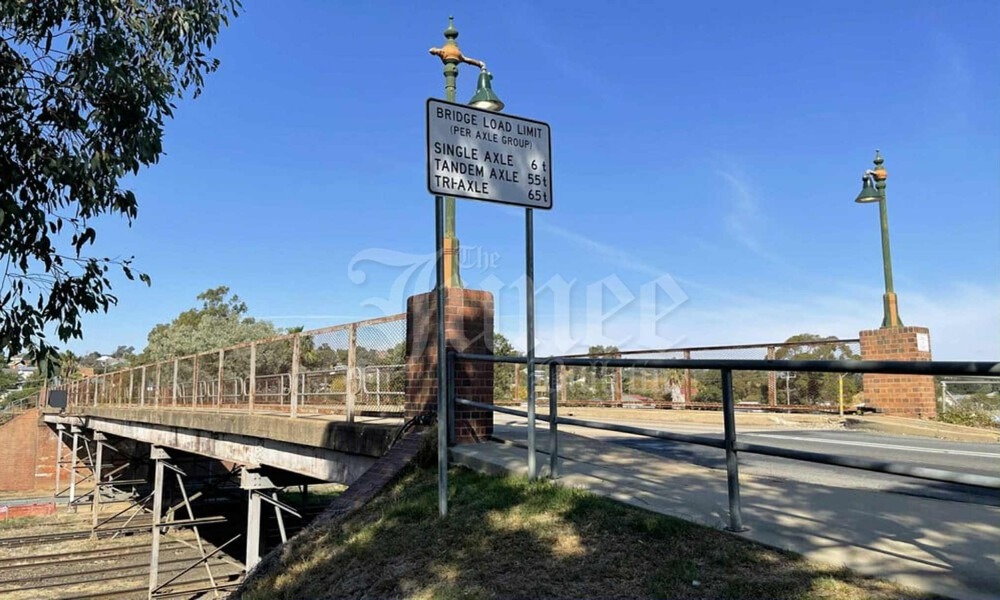
Photo: © The Junee Bulletin
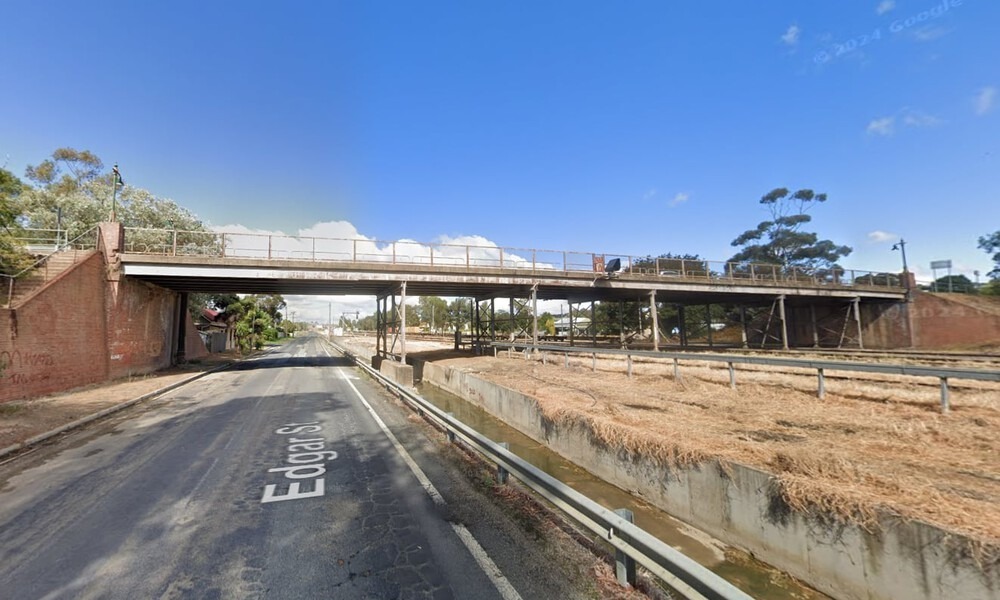
Photo: Google Maps
In February, council minutes revealed that the Railway Department would install four lamps along the bridge’s length, while Junee Municipal Council would fund street lighting on both Ducker and Kemp Streets.
The entire system would be powered by Junee’s town electricity supply — a new era of connectivity, both literal and symbolic.
On March 8, 1945, Kemp Street bridge officially opened to traffic.
But rather than a grand motorcade or ribbon-cutting ceremony, the bridge’s first crosser was a lone drover on horseback. Initially scolded by officials, he was ultimately waved through.
It was a quiet, almost cinematic moment that perfectly captured the blend of bush charm and bureaucratic inertia that so often defines regional progress.
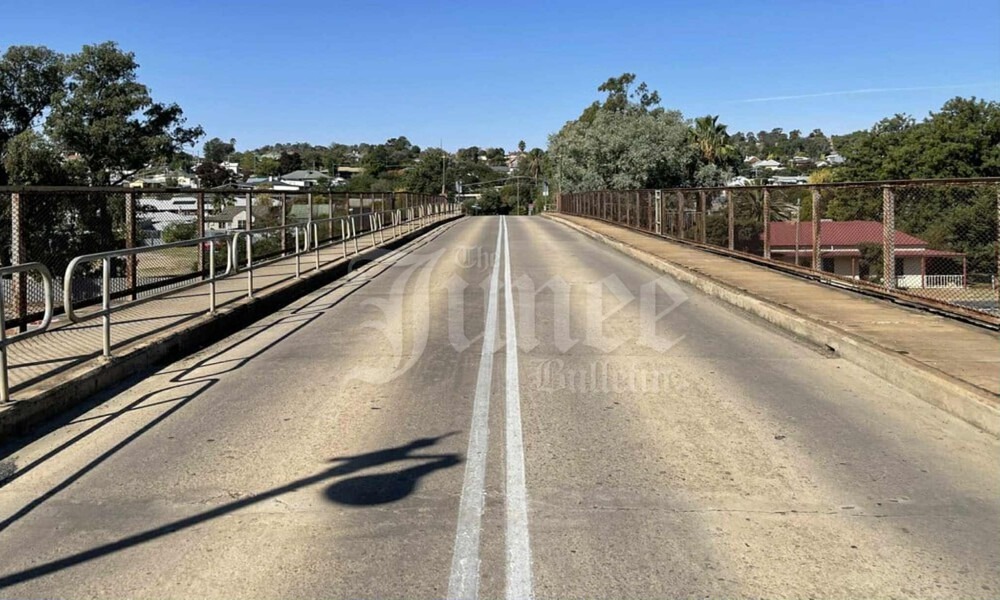
Looking east driving over Kemp Street bridge | Photo: © The Junee Bulletin
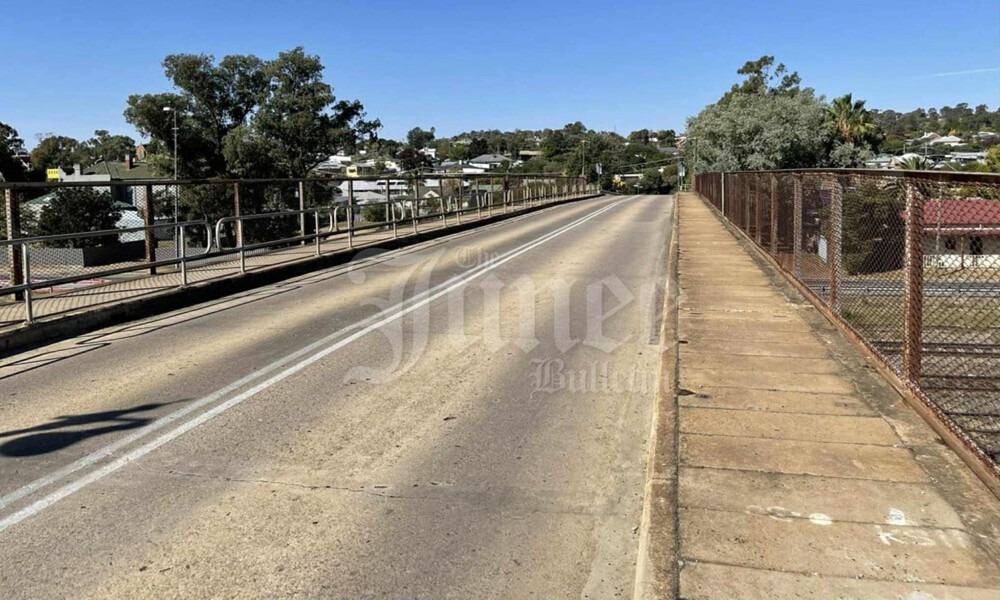
Looking east driving over Kemp Street bridge | Photo: © The Junee Bulletin
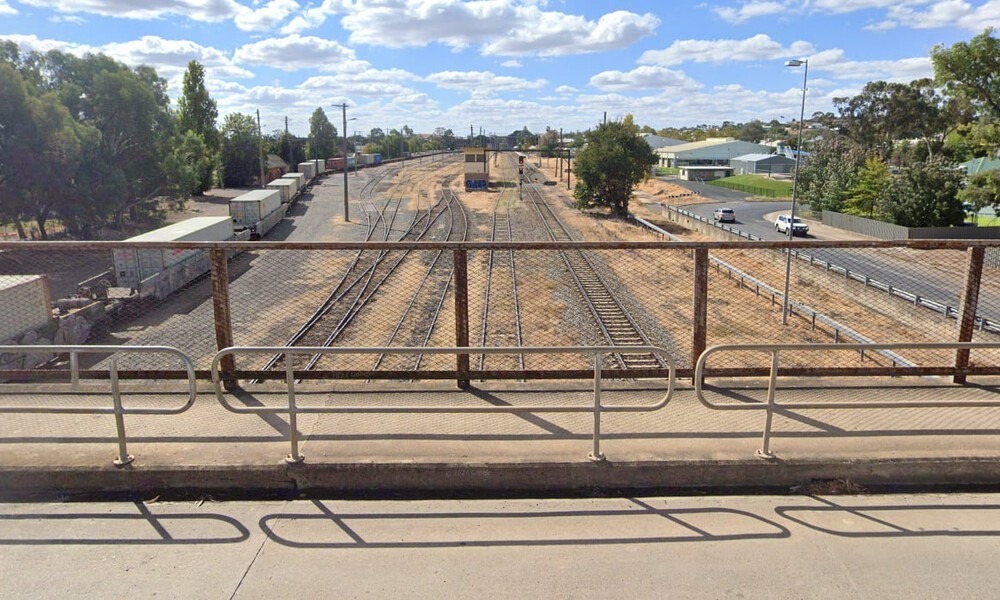
North view from the Kemp Street bridge, looking towards the Junee Railway Station | Photo: Google Maps
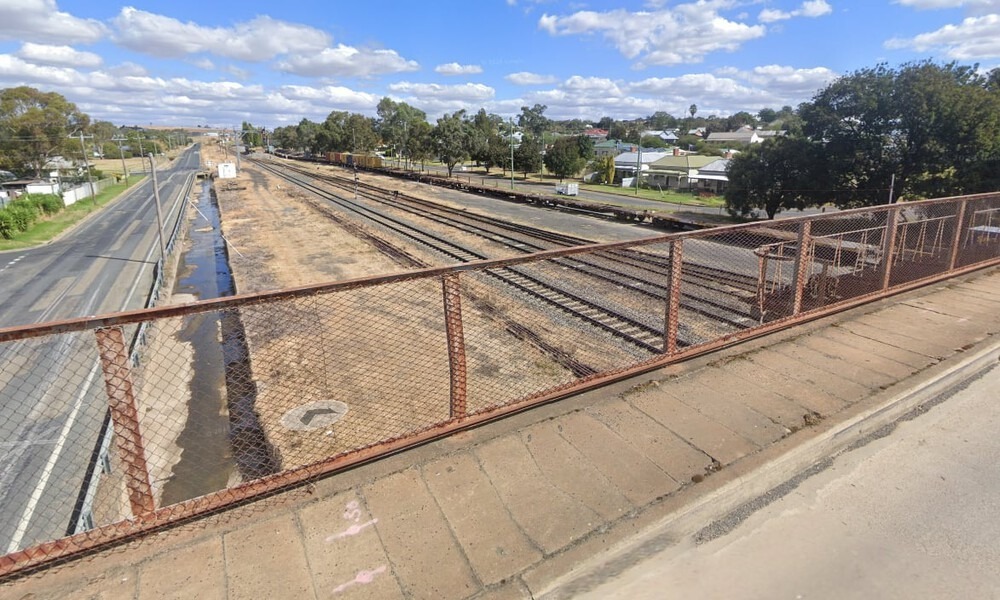
South view, towards Wagga | Photo: Google Maps
The bridge didn’t just span tracks, it united people.
For the first time, residents on both sides of Junee could move freely without dodging trains or waiting at gates. It was a milestone built on decades of frustration, dashed plans, and finally, determined action.
Ironically, the celebrations were barely over when news broke that the bridge would already require modification.
In May 1945, just two months after its opening, The Daily Advertiser reported that the structure would need to be raised by 15 inches to meet new clearance standards.
It was a bureaucratic twist worthy of modern infrastructure projects.
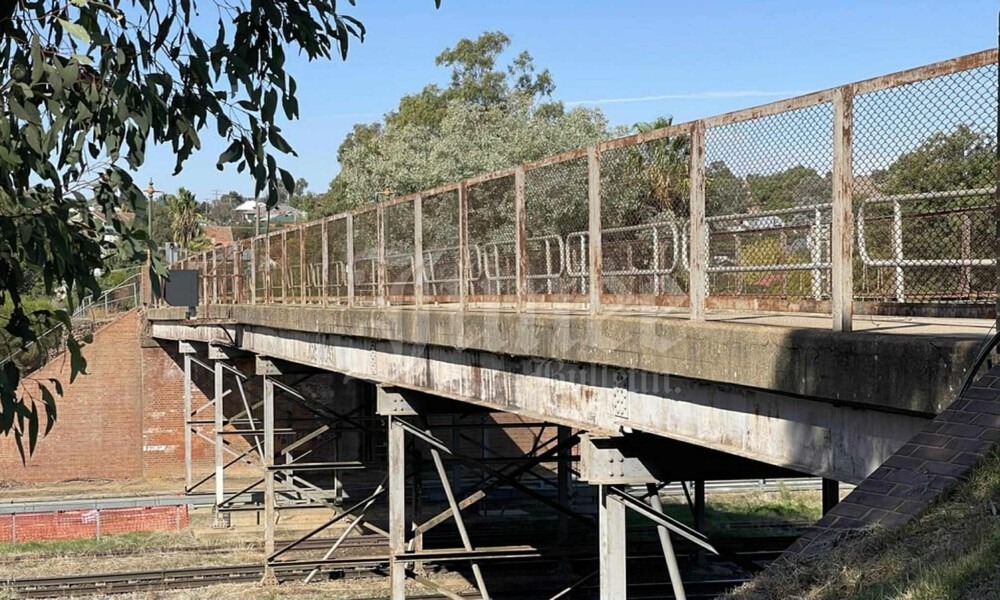
Photo: © The Junee Bulletin
Still, the bridge endured. Through decades of rumbling freight trains, shifting traffic, first kisses and funeral processions, it became a fixture of daily life, carrying the footsteps of generations.
This weekend, that memory will be physically dismantled.
As the 80-year-old structure is cut into sections and removed, Junee won’t just lose a bridge. It will mark the end of an era, and the beginning of a new one.
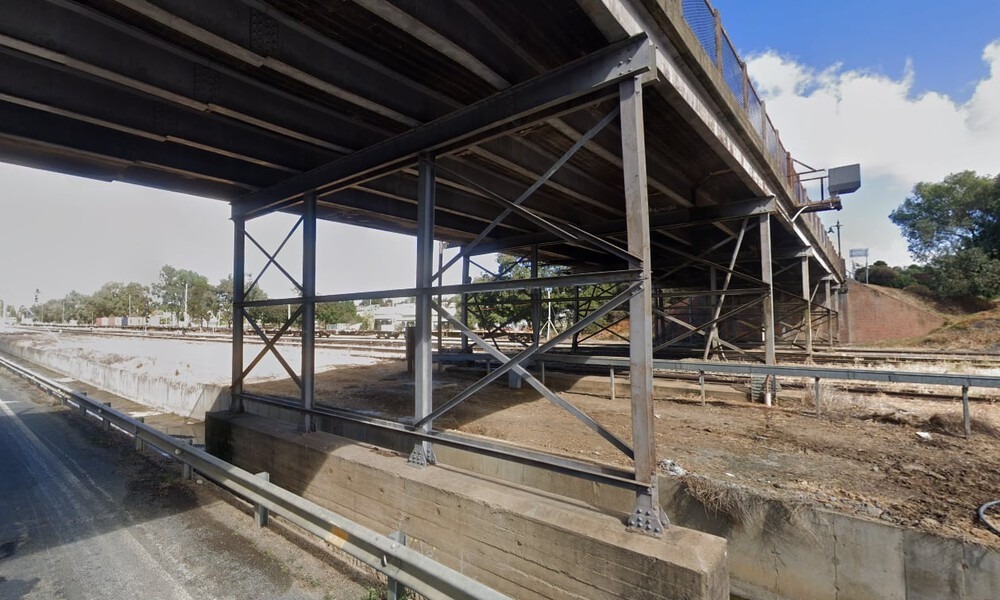
Photo: Google Maps
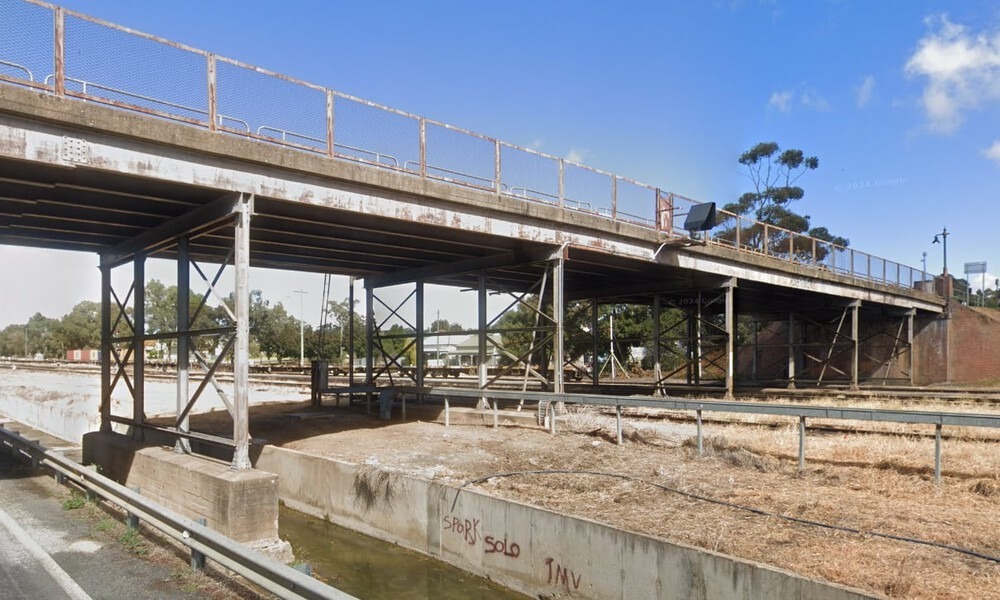
Photo: Google Maps
Yet not all will be lost.
The four original heritage lamps that have quietly lit the bridge since 1945 will be carefully removed and preserved, with plans to reuse them in the landscaping of the new overpass where possible.
If they prove unsuitable, they will be donated back to the community, ensuring their glow continues in another form.
Likewise, the red bricks that make up the near-century-old abutments — bricks that have stood through world wars, steam trains, and generations of local traffic — will be salvaged and repurposed, giving the bridge a second life in the town it once helped connect.
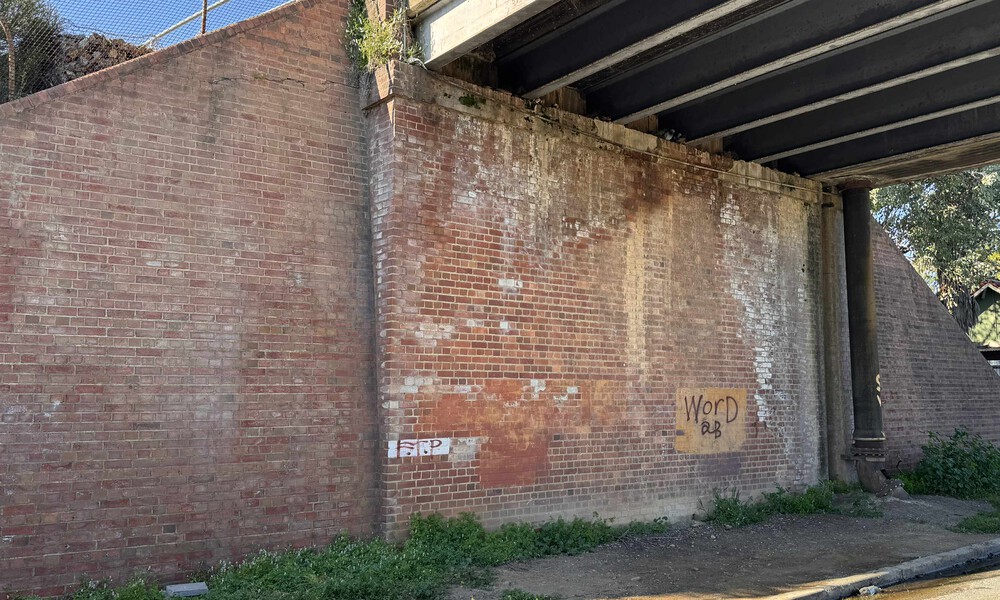
Photo: © The Junee Bulletin
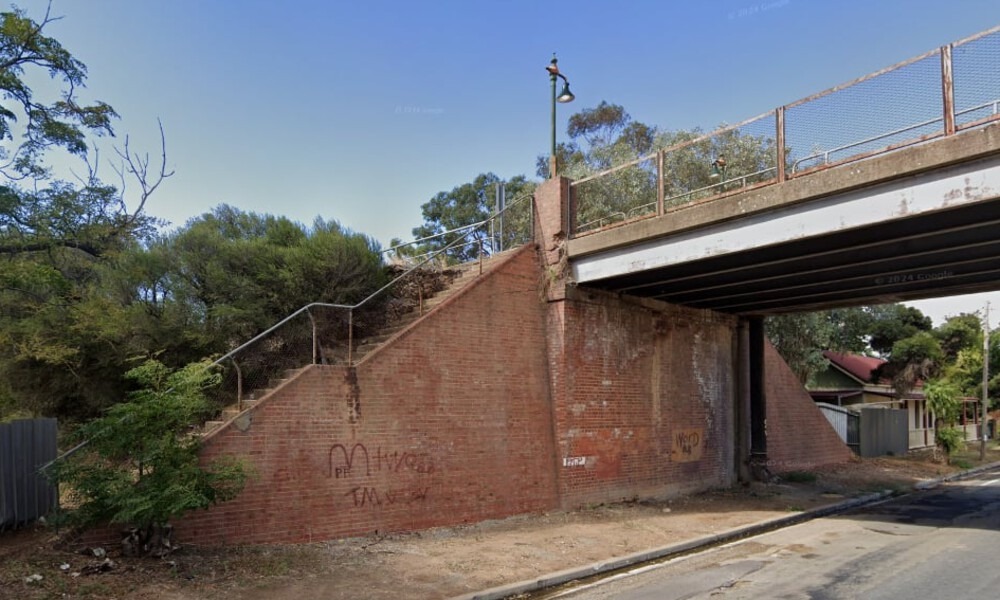
Photo: Google Maps
Even the final farewell felt poetic. The last vehicle to cross the bridge was a beautifully restored 1934 Ford Sedan Delivery, driven by a local woman. A vintage nod to the era in which the bridge was born.
History, like steel, is not so easily discarded.
The path it paved will live on — not just in concrete or timelapse footage, but in the stories passed down by those who crossed it, the bricks that find new purpose, and the lamps that may soon glow once again.








Wind in their hair: Cycling Without Age returns to Junee

Sydney murder suspects arrested at Junee prison


Pingback: Heritage lamps removed from Junee's Kemp Street bridge
Pingback: Trains halted as Kemp Street bridge demolition begins