
Local
Extreme Heatwave: Four days above 40°C set to grip the Riverina

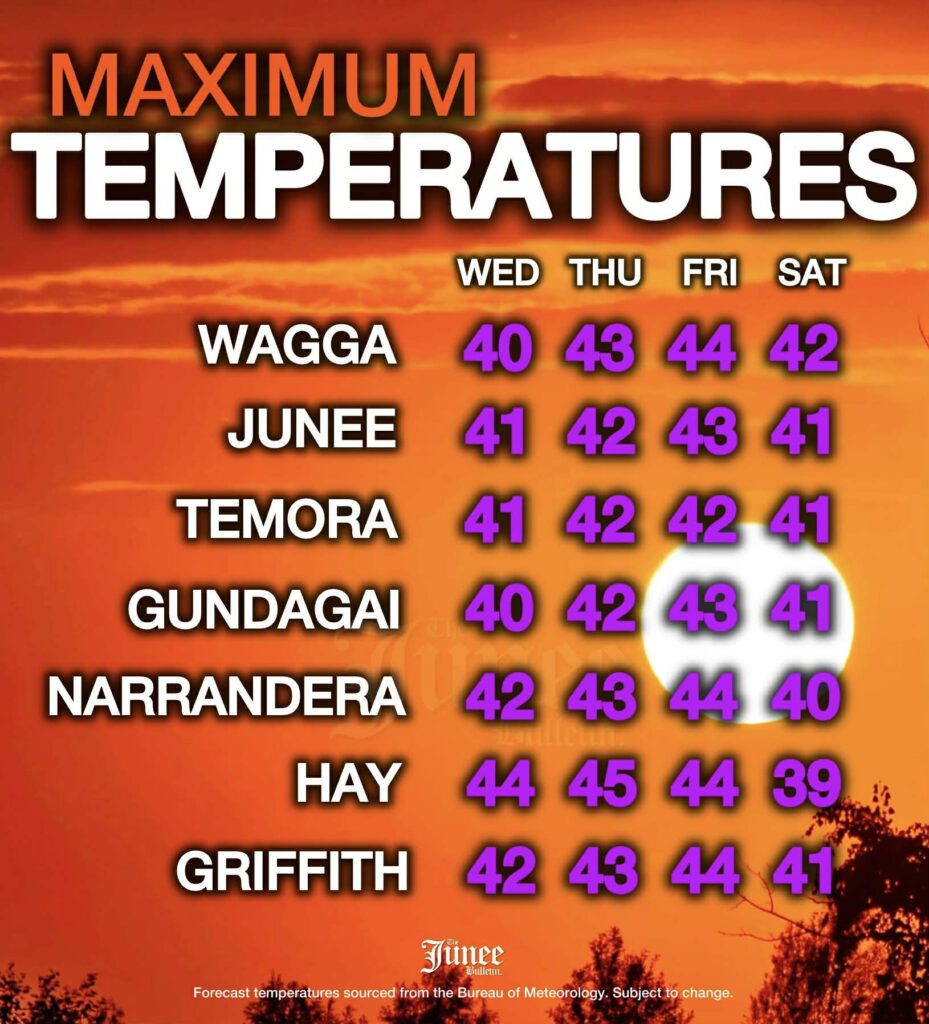
THE Riverina is preparing for its most dangerous heat event in six years, with an extreme heatwave set to deliver four consecutive days above 40°C, pushing temperatures as high as 44 degrees by the end of the week.
The Bureau of Meteorology has issued a stark warning, declaring a “significant multi-day heatwave” will rapidly intensify across much of southern and south-eastern Australia from Wednesday, placing south-eastern New South Wales firmly in the firing line.
Wagga is forecast to exceed 40 degrees from Wednesday through Saturday, with Friday expected to peak at 44°C, conditions rarely seen outside of Australia’s most extreme summers.
“Severe to extreme heatwave conditions are likely across much of South Australia, New South Wales, Victoria and northern and eastern Tasmania, with the focus of the extreme heatwave conditions in eastern and north-eastern Victoria and south-eastern NSW,” the Bureau said.
“Maximum temperatures will be 8 to 16°C above average on Wednesday through to Friday for much of SA, Vic and NSW.”
The extreme heat is forecast to coincide with strengthening winds at the end of the week, significantly increasing fire danger across the region and compounding risks to health, infrastructure and emergency services.
A RARE AND DANGEROUS EVENT
The looming heatwave marks a dramatic shift after years of comparatively subdued extreme heat.
Wagga Airport endured an extraordinary four-year stretch without a single day above 40°C, a run spanning 1,463 days and officially recorded as the Riverina’s coolest extended period on record.
That streak was broken in early 2025 when temperatures reached 40.1°C on January 27, before climbing again in December when the mercury hit 41°C and 42°C on December 18 and 19.
It was the first time since 2020 that Wagga recorded multiple 40-degree days in the same calendar year.
The contrast with earlier years is stark. In 2019 alone, Wagga recorded a staggering 19 days at or above 40°C, underscoring how rare the coming conditions have been in recent seasons.
This week’s forecast represents the first extreme heatwave predicted for the region since Black Summer (2019–20), a period that delivered both Wagga’s hottest and second-hottest days on record.
The last time the city experienced four consecutive days above 40°C was also in 2019, when temperatures surged past the mark for five straight days in January.
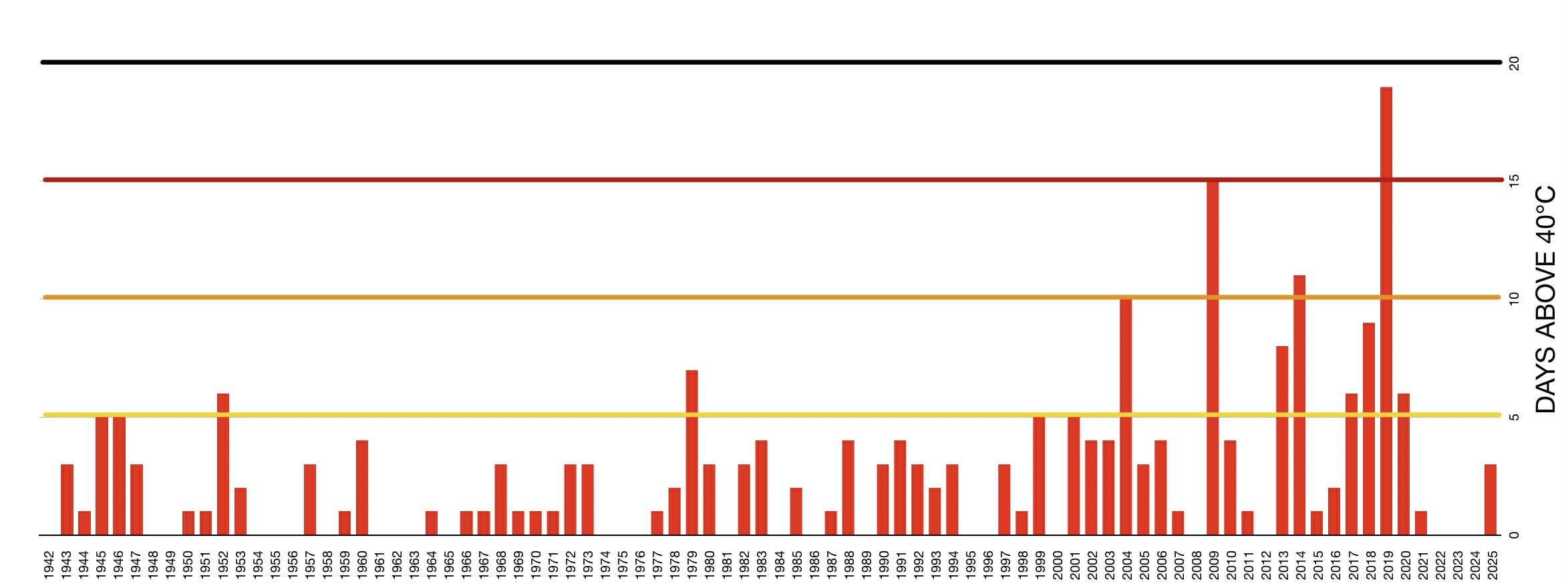
The number of days above 40 recorded at Wagga Airport each year since records began in 1942 | Source: Bureau of Meteorology
WHAT MAKES A HEATWAVE — AND WHY THIS ONE IS DIFFERENT
Heatwaves in Australia are not defined by a single hot day.
The Bureau of Meteorology classifies a heatwave when both daytime and overnight temperatures remain unusually high over a three-day period, relative to local climate and recent conditions.
“It takes more than a high daily maximum temperature to make a heatwave — it’s also about how much it cools down overnight,” the Bureau says.
“A high overnight temperature can mean that the next day heats up quickly, resulting in more hours of extreme heat. Hot nights also make it harder to recover from each day’s heat, putting more stress on the body.”
The Bureau warns that sustained heat can also strain infrastructure.
“A run of unusually high night and daytime temperatures can lead to heat-related illness and affect infrastructure such as public transport and electricity supply.”
To assess severity, forecasters use the Excess Heat Factor (EHF), which compares forecast temperatures over three days with both historical averages and conditions experienced over the previous 30 days.
“In simple terms, the EHF measures how much of a shock to the body the forecast temperatures will be, compared to the weather over the past month,” the Bureau said.
“For example, the same temperature feels different to residents of Perth and Hobart. A 35° day will feel warmer to people who live in Hobart, as they are used to cooler temperatures.”
‘DEADLY HAZARD’
Extreme heat is Australia’s deadliest natural hazard, claiming more lives than bushfires, floods and storms combined.
While low-intensity heatwaves are common during summer, severe and extreme heatwaves are rare and can be fatal, particularly for vulnerable people.
“Heatwaves can be dangerous because they pose health risks to the most vulnerable,” the Bureau warns.
“While older people and very young children are often the most vulnerable, extreme heatwaves can affect anyone’s health.”
NSW Health warns prevention is critical.
“It’s extremely important to keep cool to prevent yourself from becoming unwell,” NSW Health says.
“Heat-related illness can affect anyone and includes heat stroke, heat exhaustion, heat cramps and heat rash. It is important to learn the signs, how to treat the symptoms, and when to seek medical help.”
WHO IS MOST AT RISK
NSW Health says the people most at risk during extreme heat include:
- Older people aged 65 and over
- Babies and young children
- People with heart, lung, kidney or neurological disease
- People with diabetes
- Pregnant women
- Outdoor workers
- People who are socially isolated or homeless
Existing medical conditions can severely impair the body’s ability to regulate temperature, significantly increasing the risk of serious illness or death.
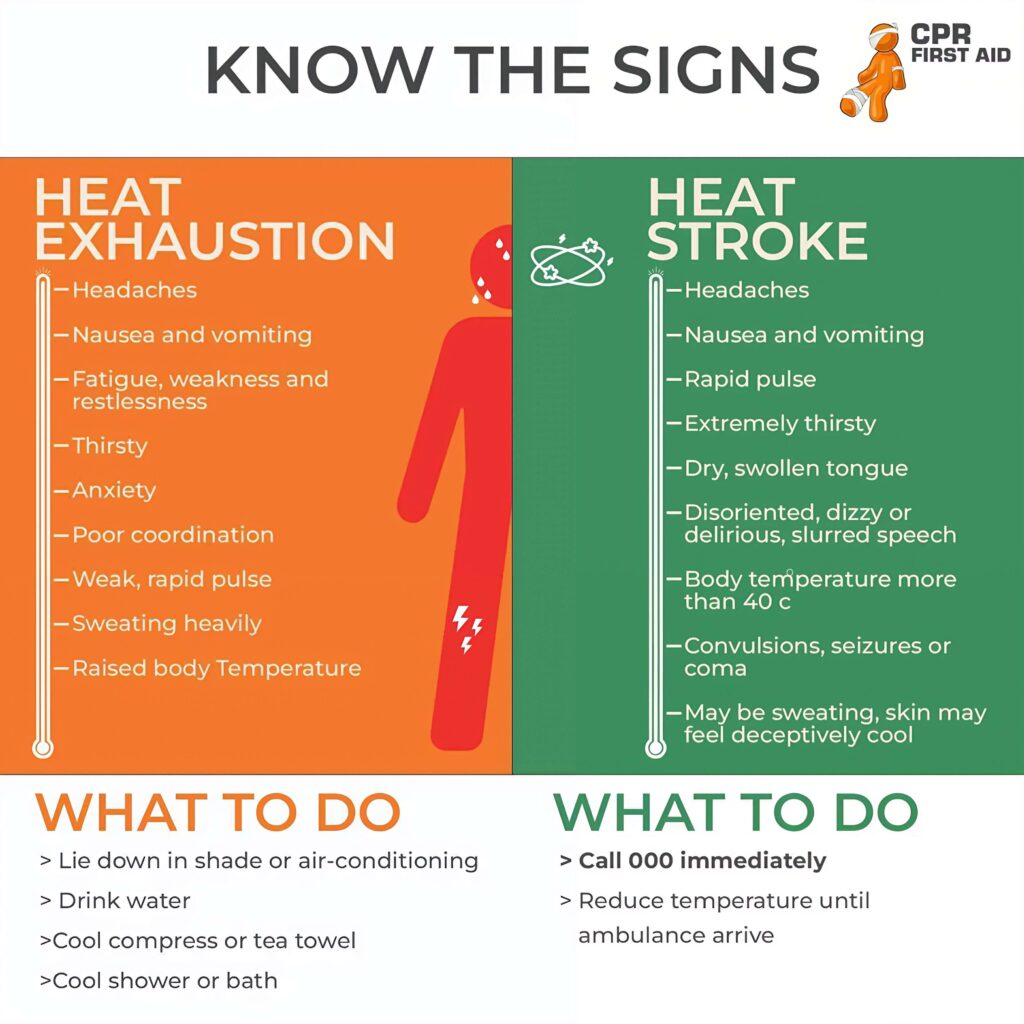
HEAT-RELATED ILLNESS: KNOW THE SIGNS
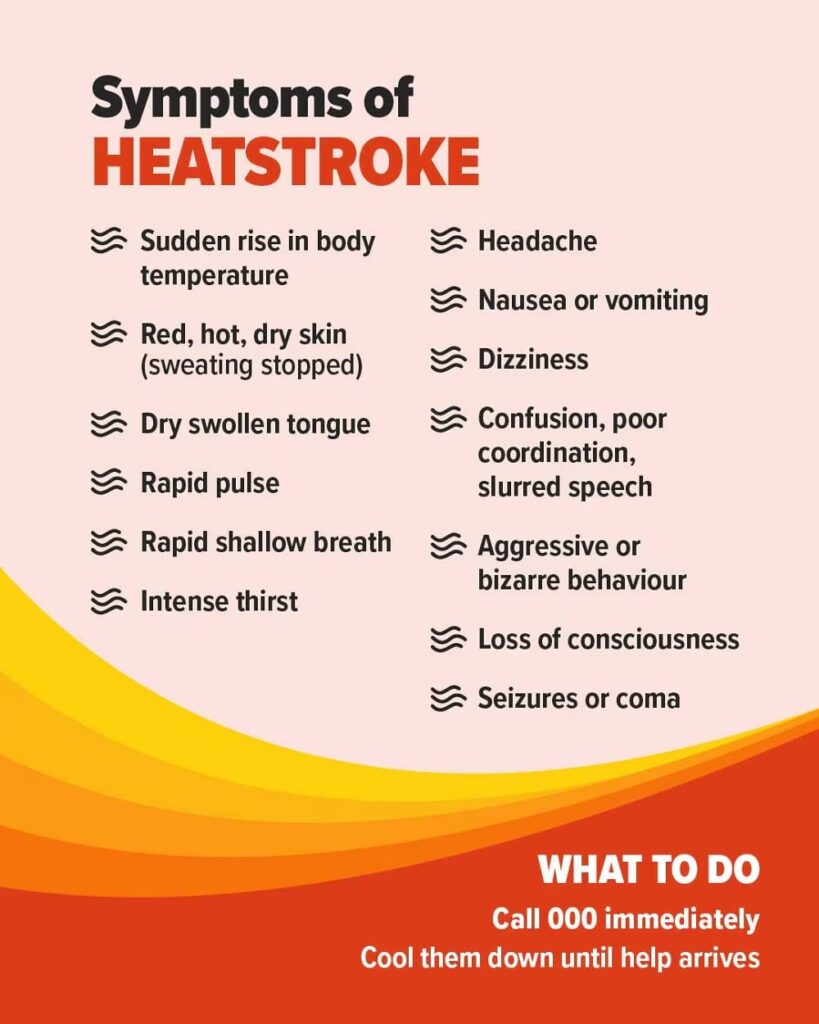
Heat stroke is the most severe form of heat-related illness and is a medical emergency. If untreated, it can cause permanent disability or death.
Symptoms may include confusion, slurred speech, agitation, altered mental state, rapid breathing, muscle twitches, a fast pulse, high body temperature and profuse sweating. Severe cases can involve loss of consciousness or seizures.
Heat exhaustion occurs when the body loses excessive water and salt. Without treatment, it can quickly progress to heat stroke.
Symptoms may include headache, nausea, vomiting, dizziness, fainting, weakness, irritability, intense thirst, heavy sweating, muscle cramps and reduced urine output.
FIRST AID: WHAT TO DO
If you or someone else shows signs of heat-related illness:
- Move to a cool or shaded area immediately
- Lay down and elevate the feet
- Loosen or remove clothing
- Actively cool the body using cool water, damp cloths, showers, ice packs or wet clothing
- Drink water
If symptoms do not improve, seek medical advice. Call healthdirect on 1800 022 222.
If symptoms worsen or heat stroke is suspected, call triple zero (000) immediately.
BEAT THE HEAT
COOL YOUR HOME
- Use air-conditioning if available to maintain a comfortable indoor temperature. If air-conditioning is not available, use electric fans. Be aware that at very high temperatures (around 39°C and above), fans may be less effective.
- Close curtains and blinds during the day to block out direct sunlight.
- Spend time in the coolest part of your home.
- Avoid using stoves and ovens where possible, as they can significantly increase indoor temperatures.
- When outdoor temperatures drop in the evening or overnight, open windows and doors to allow warm air to escape and cooler air to circulate.
COOL YOUR BODY
- Wear light, loose-fitting clothing made from breathable fabrics.
- Take cool showers or baths, or sit with your feet in cool water.
- Wet your skin with cool water using a spray bottle, damp cloth or sponge.
- Apply cool packs or crushed ice wrapped in a damp towel to your neck, shoulders or armpits.
STAY OUT OF THE HEAT
- Avoid being outdoors during the hottest part of the day where possible.
- If you must go outside, seek shade and take regular breaks.
- Limit physical activity, including exercise and household chores, to early morning or later in the evening when temperatures are lower.
- Protect yourself from the sun by wearing sunscreen, sunglasses, sun-protective clothing and a wide-brim hat.
PLAN AHEAD
- Seek out cool or air-conditioned public places in your local area if it is safe to travel.
- Stock up on food, drinks, medications and supplies for both people and pets so you can avoid going out in extreme heat.
- Fill ice trays and prepare cool packs in advance.
- Ensure reverse-cycle air-conditioners are set to cooling mode, not heating.
LOOK OUT FOR OTHERS & STAY INFORMED
- Check in on family, friends and neighbours who may be more vulnerable during extreme heat.
- Consider how heat may affect planned activities and adjust schedules accordingly.
- Monitor weather updates, road conditions, transport alerts and bushfire warnings during extreme heat events.
DON’T FORGET YOUR PETS
Extreme heat can be life-threatening for pets, often developing faster than many owners realise.
Animal welfare groups warn that heat stress and heatstroke can occur rapidly during heatwaves, particularly in small pets, birds, flat-faced dog breeds, elderly animals and those with existing health conditions.
Pets should always have access to shade, fresh cool water and well-ventilated spaces, and where possible be brought indoors during extreme heat.
Never leave animals in vehicles — even briefly — as temperatures can become fatal within minutes.

Dog playing with water hose. Free public domain CC0 photo.
Warning signs of heat stress include panting, drooling, lethargy, vomiting, unsteadiness, confusion or collapse.
If these symptoms appear, move the animal to a cool area immediately and seek veterinary care.
Residents are also encouraged to help native wildlife by placing shallow water dishes and bird baths in shaded areas and keeping pets away from wildlife water stations.
For detailed, species-specific advice on protecting pets, livestock and wildlife during extreme heat, read our full guide here.
STAY INFORMED
Residents are urged to closely monitor weather conditions, fire danger ratings and health advice as the heatwave unfolds.
Up-to-date forecasts, heatwave warnings, fire warnings and emergency alerts can be accessed via the Bureau of Meteorology, the Hazards Near Me app and the Fires Near Me website.
- For tips on how to beat the heat, click here.
- For information on how to identify and treat heat-related illness, click here.
- To check the fire danger rating for your area, click here.
- The view official heatwave warnings for your area, click here.
- To monitor and be alerted to fire incidents in your area, download the Hazards Near Me app or visit the Fires Near Me website.
- To check the 7-day forecast for your area, visit the Bureau of Meteorology’s website here.








Wind in their hair: Cycling Without Age returns to Junee

Sydney murder suspects arrested at Junee prison


