
Local
‘Historic heatwave’: Temps to surge past 40°C for seven days

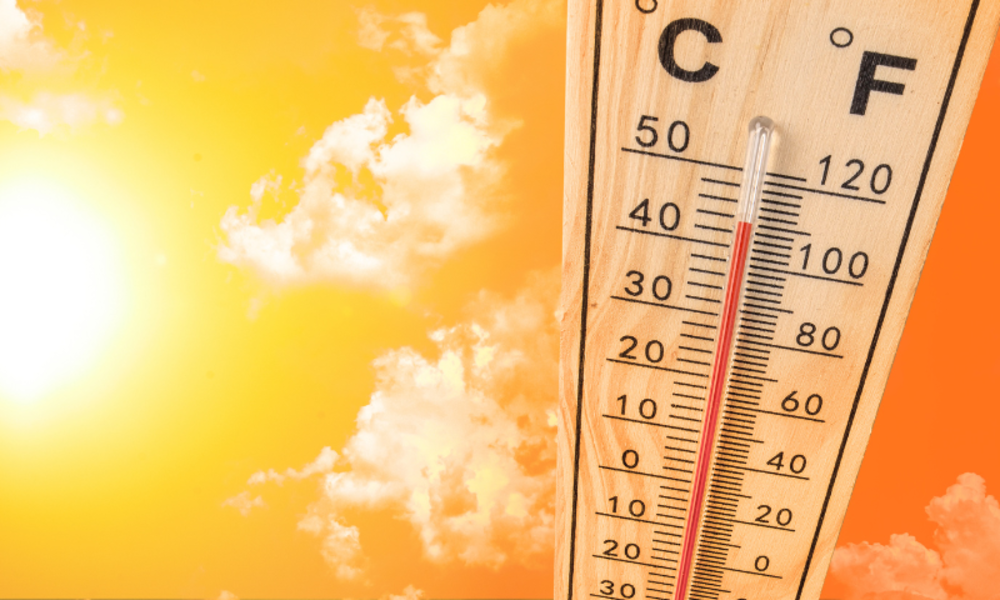
SUNDAY, January 25 | WAGGA is on the brink of an extreme heat event, as the city stares down the barrel of an unprecedented seven consecutive days above 40°C.
If the latest outlook holds, Wagga will reach a searing 45°C on Wednesday, January 28. The city’s all-time official temperature record held by the Bureau of Meteorology is 46.1°C, set at Wagga Airport on January 4, 2020.
A top of 45°C would equal the fourth hottest day ever recorded at the airport , while Monday’s forecast maximum of 43°C would make it the hottest Australia Day on record, surpassing the previous benchmark of 42.5°C set in 2019.
TOP 10 HOTTEST TEMPERATURES RECORDED IN WAGGA*
- 46.1°C – Jan 4, 2020
- 45.3°C – Jan 31, 2020
- 45.2°C – Feb 7, 2009 & Jan 17, 2019
- 45.0°C – Feb 10, 2017
- 44.8°C – Jan 23, 2001
- 44.6°C – Jan 1, 2006 & Feb 1, 1968
- 44.3°C – Jan 16, 2019
- 44.2°C – Jan 3, 1973 & Jan 3, 1990
- 44.1°C – Jan 7, 2018 & Jan 18, 2013
- 43.9°C – Jan 15, 2019
TOP 5 HOTTEST AUSTRALIA DAYS RECORDED IN WAGGA*
- 42.5°C 2019
- 42.3°C 1960
- 41.5°C 2003
- 40.3°C 1947
- 38.1°C 2011
*Since 1942. Temperatures sourced from the Bureau of Meteorology’s official weather station located at Wagga Airport.
Beyond the individual peaks, it is the duration of the heat that sets this event apart.
Wagga has never before recorded seven straight days at or above 40°C in official Bureau of Meteorology records.
The city has endured two five-day runs of extreme heat — in 1979 and again in 2019 — as well as eight separate four-day runs. But a six-day stretch has never occurred, and none of those historic events unfolded across an Australia Day long weekend.
“This heatwave is being driven by a slow-moving weather pattern over southern Australia,” Weatherzone meteorologist Yoska Hernandez said.
“With minimal change expected in the overall circulation, hot air continues to spread across south-eastern parts of the country, allowing the extreme heat to persist.”
If the forecast rings true, this will mark the most sustained and intense heat event Wagga has experienced since modern, standardised temperature recording began.
Why “back in my day” doesn’t apply
As the forecast has intensified, social media users have pointed to anecdotal records from the late 1800s and early 1900s suggesting extended runs of 40-plus temperatures in Wagga.
While those historical accounts form part of the region’s climate story, meteorologists say the method of measurement is what determines whether temperatures can be meaningfully compared across decades.
The Bureau of Meteorology uses a Stevenson screen at its official weather stations — a white, louvred enclosure designed to shield thermometers from direct sunlight, radiant heat and wind effects that can artificially inflate or suppress readings.
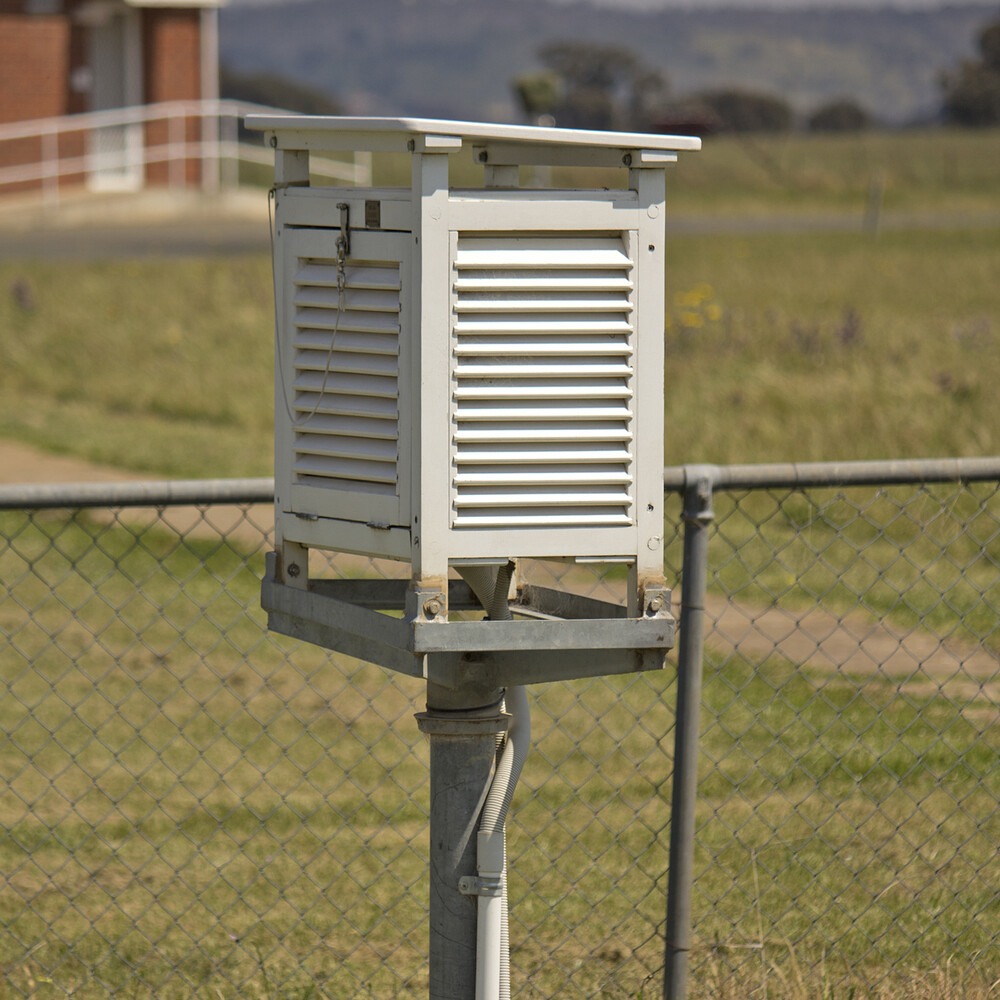
A Stevenson screen protects meteorological instruments from rain, direct sunlight, and other elements while allowing air to circulate freely for accurate and comparable temperature and humidity readings | Photo: Wikimedia
To meet national and international standards, the screen must be:
- positioned 1.2 metres above the ground;
- located at least 10 metres from buildings, trees or other structures; and
- placed over natural ground, away from concrete or reflective surfaces.
These controls ensure the temperature recorded reflects the true ambient air temperature, rather than heat radiating from walls, soil, metal or direct sun exposure.
Before standardised instrumentation became widespread, temperatures were often measured using unshielded thermometers mounted on buildings, fence posts or verandahs — locations that can dramatically distort readings, especially during extreme heat.
That is why official records begin in 1942 at Wagga Airport, when consistent, comparable measurement practices were put in place.
A heatwave without precedent
Under Bureau definitions, a heatwave is determined by unusually high daytime and overnight temperatures sustained over several days relative to the local climate and recent conditions.
If Wagga reaches seven straight days above 40°C, it will move beyond every previous heat event in the city’s official record, both in length and intensity.
The two five-day runs in 1979 and 2019 have long stood as benchmarks for extreme heat in the region. This event, however, is forecast to exceed them both, placing it in a category of its own.
The fact that the run also spans Australia Day — a period traditionally marked by outdoor events, ceremonies and public gatherings — adds another layer of significance and challenge for the community.
With the potential for the longest 40-plus run ever documented, the coming days are set to be remembered as a defining moment in Wagga’s climate history.
Health authorities say preparation and awareness will be critical to reducing the risk of heat-related illness and preventing fatalities.
“It’s extremely important to keep cool to prevent yourself from becoming unwell,” NSW Health said.
“Heat-related illness can affect anyone.”
A RARE PATTERN
While heat is no stranger to the Riverina, what sets this event apart is its sustained intensity and its alignment with a major public holiday.
Wagga has only experienced 10 recorded occasions where temperatures have exceeded 40°C for four or more consecutive days.
Of those, just two — in 2009 and 2019 — produced temperatures of 45°C or higher, and none have ever occurred across an Australia Day long weekend.
The last time Wagga endured a run of four or more days above 40°C was January 2019, when temperatures surged past the mark for five straight days during the Black Summer period.
A similar four-day run was forecast earlier this month, beginning January 7, with a peak of 44°C expected. In the end, only three days broke the threshold, with maximums of 41.0°C, 43.1°C and 41.4°C recorded.
By contrast, Wagga recorded no days above 40°C from 2021 to 2025 — a four-year stretch totalling 1,463 days — underscoring how sharply conditions are now shifting back toward extreme heat.
EXTREME HEATWAVES (4 or more consecutive days above 40°C)
1952 – 4 days (Jan 22-25) Tuesday-Friday
1979 – 5 days (Jan 5-9)
1999 – 4 days (Jan 4-7)
2004 – 4 days (Jan 1-4)
2009 – 2x 4 days (Jan 29-Feb 1 / Feb 5-8)
2013 – 4 days (Jan 5-8)
2014 – 2x 4 days (Jan 15-18 / Jan 31-Feb 3)
2019 – 4 days (Jan 14-Jan 18)
A DEADLY HAZARD
Extreme heat is Australia’s deadliest natural hazard, claiming more lives than bushfires, storms and floods combined.
NSW Health warns that heat stroke — the most severe form of heat-related illness — is a medical emergency and can be fatal without immediate treatment.
Symptoms can include confusion, slurred speech, rapid breathing, high body temperature, heavy or absent sweating, seizures and loss of consciousness.
Less severe conditions, such as heat exhaustion, dehydration and muscle cramps, can escalate rapidly if left unmanaged.
Officials are urging residents to stay well hydrated, limit physical exertion during peak afternoon heat, use shade, air-conditioning or public cooling facilities, and check in on elderly neighbours, young children and those who may be socially isolated.
Sustained extreme heat can also place pressure on electricity supply, transport networks and emergency services, with increased demand expected for public pools and cooling centres across the region.
WHAT MAKES A HEATWAVE?
Heat of this severity is not defined by a single hot afternoon.
The Bureau of Meteorology classifies a heatwave when both daytime and overnight temperatures remain unusually high over a three-day period, relative to the local climate and recent conditions.
The critical factor, forecasters say, is how little relief arrives after sunset.
“It takes more than a high daily maximum temperature to make a heatwave — it’s also about how much it cools down overnight,” the Bureau notes.
Warm nights allow the following day to heat rapidly, extending the number of hours spent in extreme conditions and placing additional strain on the body — particularly for older people, babies, young children, pregnant women, people with chronic health conditions and outdoor workers.
To assess severity, meteorologists use the Excess Heat Factor, which compares forecast temperatures against long-term averages and the conditions experienced over the previous 30 days, effectively measuring how much of a “shock” the coming heat will be to people and infrastructure.
WHO IS MOST AT RISK
NSW Health says the people most at risk during extreme heat include:
- Older people aged 65 and over
- Babies and young children
- People with heart, lung, kidney or neurological disease
- People with diabetes
- Pregnant women
- Outdoor workers
- People who are socially isolated or homeless
Existing medical conditions can severely impair the body’s ability to regulate temperature, significantly increasing the risk of serious illness or death.
HEAT-RELATED ILLNESS: KNOW THE SIGNS
Heat stroke is the most severe form of heat-related illness and is a medical emergency. If untreated, it can cause permanent disability or death.
Symptoms may include confusion, slurred speech, agitation, altered mental state, rapid breathing, muscle twitches, a fast pulse, high body temperature and profuse sweating. Severe cases can involve loss of consciousness or seizures.
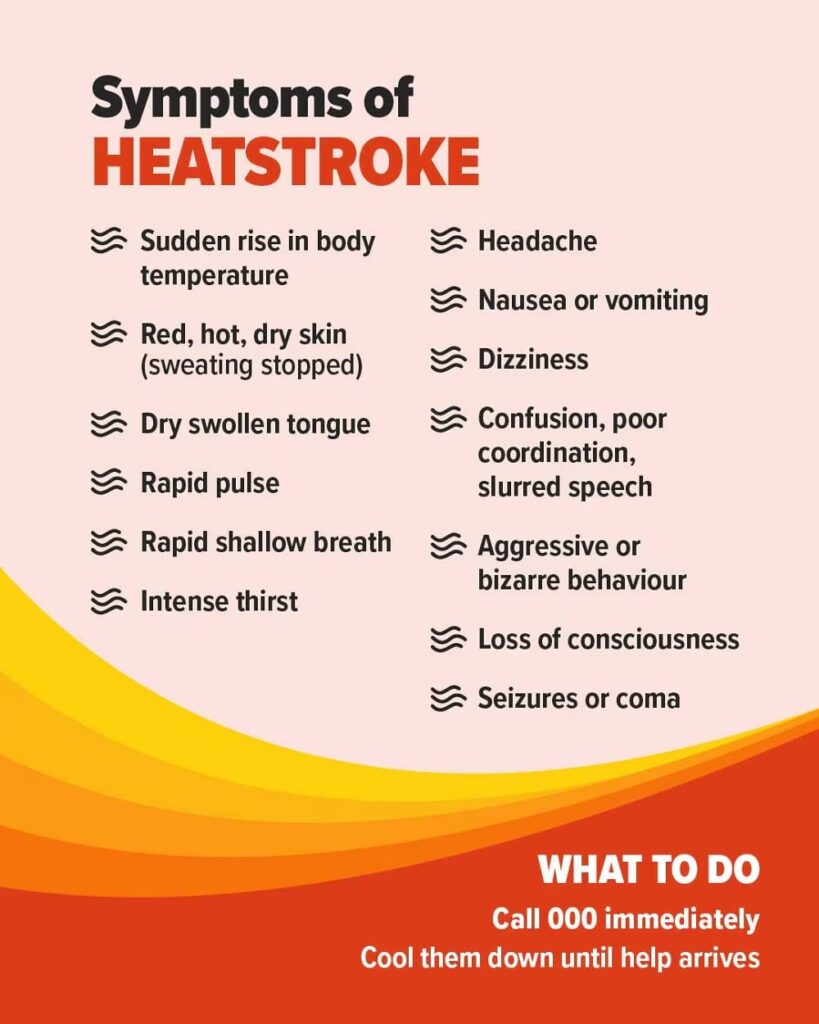
Heat exhaustion occurs when the body loses excessive water and salt. Without treatment, it can quickly progress to heat stroke.
Symptoms may include headache, nausea, vomiting, dizziness, fainting, weakness, irritability, intense thirst, heavy sweating, muscle cramps and reduced urine output.
FIRST AID: WHAT TO DO
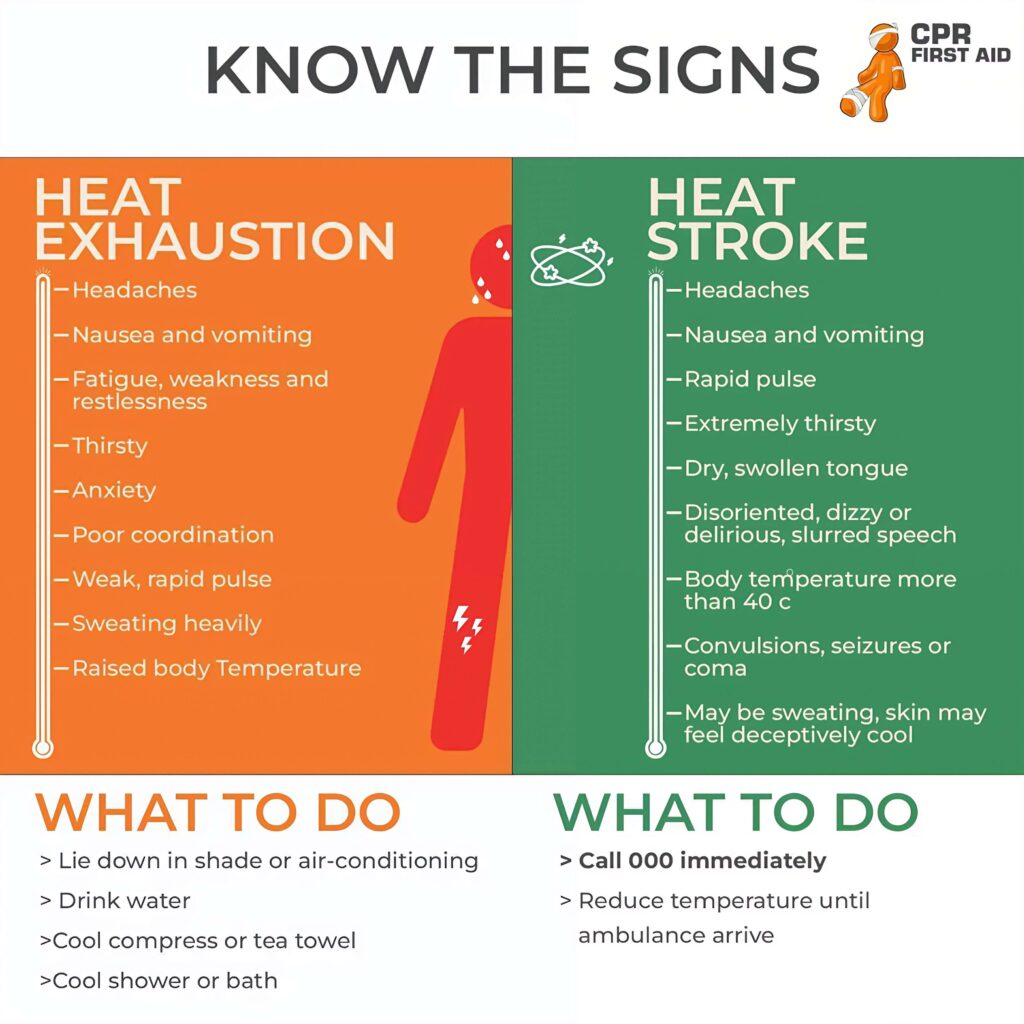
If you or someone else shows signs of heat-related illness:
- Move to a cool or shaded area immediately
- Lay down and elevate the feet
- Loosen or remove clothing
- Actively cool the body using cool water, damp cloths, showers, ice packs or wet clothing
- Drink water
If symptoms do not improve, seek medical advice. Call healthdirect on 1800 022 222.
If symptoms worsen or heat stroke is suspected, call triple zero (000) immediately.
BEAT THE HEAT
COOL YOUR HOME
- Use air-conditioning if available to maintain a comfortable indoor temperature. If air-conditioning is not available, use electric fans. Be aware that at very high temperatures (around 39°C and above), fans may be less effective.
- Close curtains and blinds during the day to block out direct sunlight.
- Spend time in the coolest part of your home.
- Avoid using stoves and ovens where possible, as they can significantly increase indoor temperatures.
- When outdoor temperatures drop in the evening or overnight, open windows and doors to allow warm air to escape and cooler air to circulate.
COOL YOUR BODY
- Wear light, loose-fitting clothing made from breathable fabrics.
- Take cool showers or baths, or sit with your feet in cool water.
- Wet your skin with cool water using a spray bottle, damp cloth or sponge.
- Apply cool packs or crushed ice wrapped in a damp towel to your neck, shoulders or armpits.
STAY OUT OF THE HEAT
- Avoid being outdoors during the hottest part of the day where possible.
- If you must go outside, seek shade and take regular breaks.
- Limit physical activity, including exercise and household chores, to early morning or later in the evening when temperatures are lower.
- Protect yourself from the sun by wearing sunscreen, sunglasses, sun-protective clothing and a wide-brim hat.
PLAN AHEAD
- Seek out cool or air-conditioned public places in your local area if it is safe to travel.
- Stock up on food, drinks, medications and supplies for both people and pets so you can avoid going out in extreme heat.
- Fill ice trays and prepare cool packs in advance.
- Ensure reverse-cycle air-conditioners are set to cooling mode, not heating.
LOOK OUT FOR OTHERS & STAY INFORMED
- Check in on family, friends and neighbours who may be more vulnerable during extreme heat.
- Consider how heat may affect planned activities and adjust schedules accordingly.
- Monitor weather updates, road conditions, transport alerts and bushfire warnings during extreme heat events.
DON’T FORGET YOUR PETS
Extreme heat can be life-threatening for pets, often developing faster than many owners realise.
Animal welfare groups warn that heat stress and heatstroke can occur rapidly during heatwaves, particularly in small pets, birds, flat-faced dog breeds, elderly animals and those with existing health conditions.
Pets should always have access to shade, fresh cool water and well-ventilated spaces, and where possible be brought indoors during extreme heat.
Never leave animals in vehicles — even briefly — as temperatures can become fatal within minutes.

Warning signs of heat stress include panting, drooling, lethargy, vomiting, unsteadiness, confusion or collapse.
If these symptoms appear, move the animal to a cool area immediately and seek veterinary care.
Residents are also encouraged to help native wildlife by placing shallow water dishes and bird baths in shaded areas and keeping pets away from wildlife water stations.
For detailed, species-specific advice on protecting pets, livestock and wildlife during extreme heat, read our full guide here.
STAY INFORMED
Residents are urged to closely monitor weather conditions, fire danger ratings and health advice as the heatwave unfolds.
Up-to-date forecasts, heatwave warnings, fire warnings and emergency alerts can be accessed via the Bureau of Meteorology, the Hazards Near Me app and the Fires Near Me website.
- For tips on how to beat the heat, click here.
- For information on how to identify and treat heat-related illness, click here.
- To check the fire danger rating for your area, click here.
- The view official heatwave warnings for your area, click here.
- To monitor and be alerted to fire incidents in your area, download the Hazards Near Me app or visit the Fires Near Me website.
- To check the 7-day forecast for your area, visit the Bureau of Meteorology’s website here.













Mother’s Day: Junee mums showered with love, laughter and tea

Junee still on track for double-stack trains despite Inland Rail cuts

Inland Rail route slashed as costs blow out to $45bn



Pingback: Australia Day 2026 in Junee: Events, awards and family fun