
Riverina
On The Menu: Winter’s favourite catch returns as crayfish season opens

WINTER has arrived and with it comes the return of one of the Riverina’s most iconic fishing traditions.
The highly anticipated 2026 Murray Crayfish season officially opened across southern NSW on Monday, June 1, sending everyone from seasoned river fishers to families back to sections of the Murray and Murrumbidgee rivers in pursuit of the prized native species.
Native to the two river systems and their tributaries, Murray Crayfish are the second-largest freshwater crayfish in the world and remain one of Australia’s most distinctive freshwater catches.
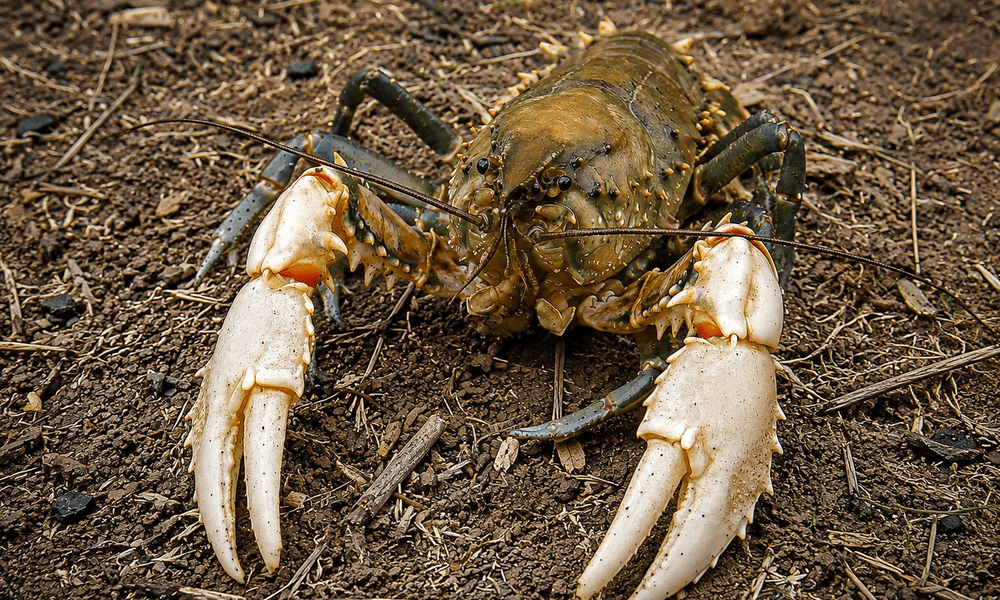
Growing up to three kilograms and easily identified by their large white claws, spiny bodies and green-brown colouring, Murray Crayfish are prized freshwater delicacies sought after by many for the table.
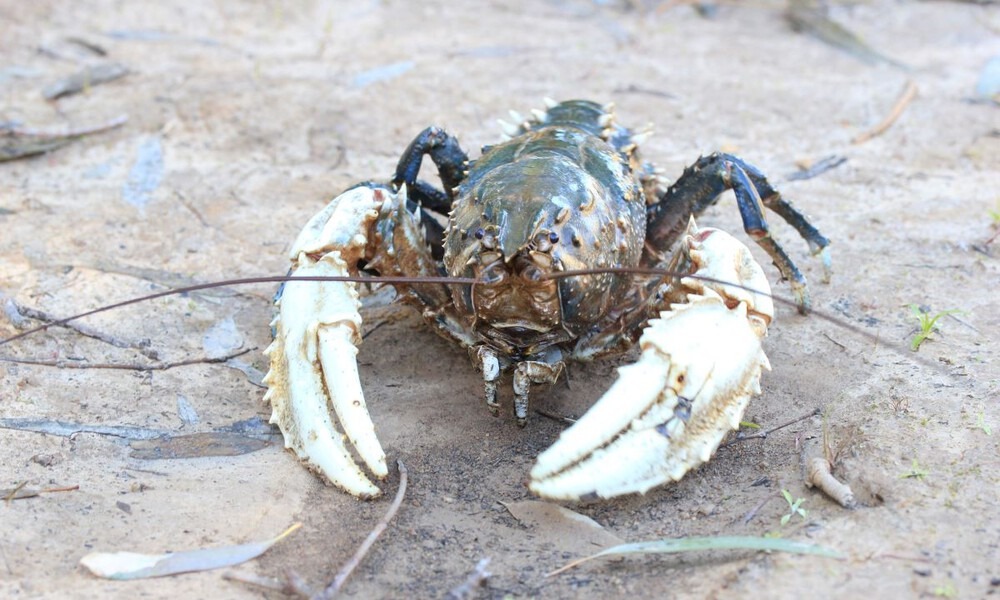
Image: NSW Fisheries
But as locals keen for a catch dust off the nets, authorities are reminding fishers that strict rules remain in place to protect the vulnerable species and support its long-term recovery.
Scroll down for a full breakdown of what you can and cannot do.
Murray Crayfish are endemic to the Murray-Darling Basin and were once widespread throughout the Murray and Murrumbidgee catchments.
However, populations have significantly declined since European settlement due to habitat degradation, environmental pressures and other impacts, with the species now listed as vulnerable in NSW.
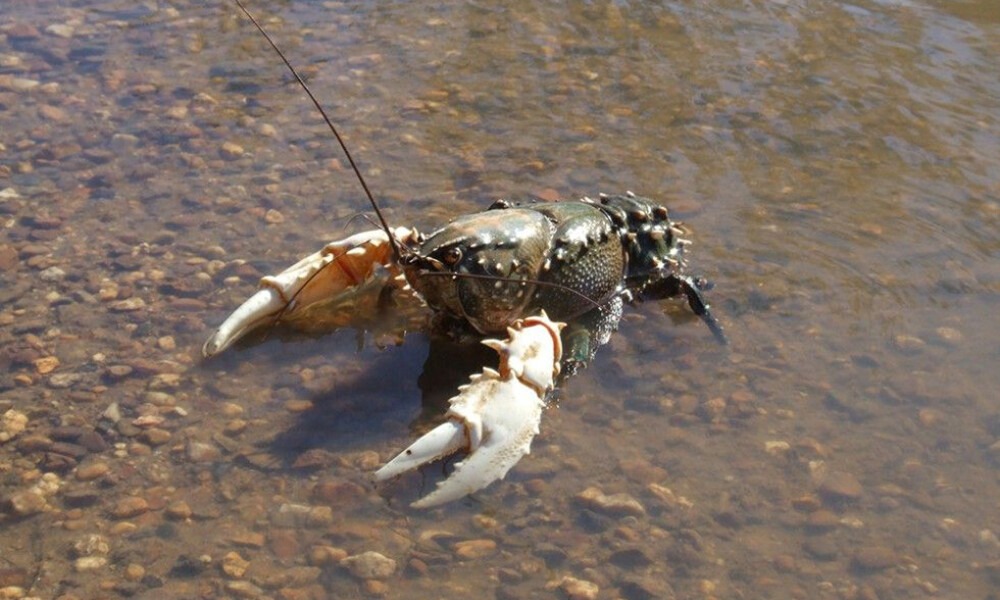
Image: NSW Fisheries
Declines have been further exacerbated by widespread hypoxic blackwater events, which occur when floods wash large amounts of organic material into waterways, reducing oxygen levels and placing stress on aquatic life.
DPIRD Fisheries officers will be patrolling waterways throughout the season to monitor compliance and crack down on illegal fishing activity.
NSW Department of Primary Industries and Regional Development (DPIRD) Director of Aquaculture and Industry Development Ian Lyall said it was important people followed the rules.
“We want to ensure fishers follow the rules so this unique fishery can be sustained for future generations,” Mr Lyall said.
THE RULES
WHERE CAN THEY BE TAKEN FROM?
In NSW, Murray Crayfish can only be taken from designated sections of the Murray and Murrumbidgee rivers — and only during the months of June, July and August.
For the Murray River, fishing is permitted between Hume Weir and the Newell Highway bridge at Tocumwal, including Lake Mulwala.
For the Murrumbidgee River, Murray Crayfish may be taken between the Hume Highway bridge at Gundagai and Berembed Weir, excluding Old Man Creek.
HOW MANY CAN I TAKE?
The daily bag limit is two crayfish per person, with a possession limit of four.
In simple terms, this means you can catch and keep a maximum of two crayfish per person each day, but cannot have more than four in your possession at any one time, including in your esky, vehicle, fridge or freezer.
Berried (egg-carrying) females must not be taken under any circumstances.
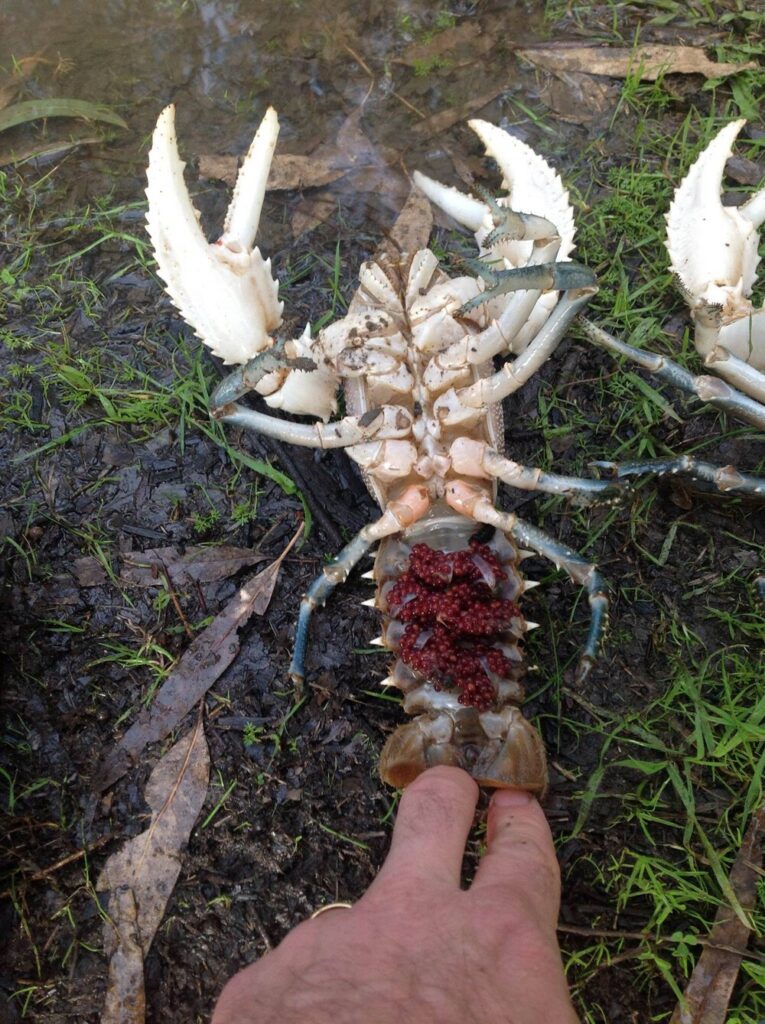
A berried, or egg-carrying, female Murray Crayfish | Image: NSW Fisheries
WHAT ARE THE SIZE LIMITS?
Murray Crayfish must measure between 10cm and 12cm in length.
This is measured from the rear of the eye socket to the centre rear of the carapace.
Free measuring devices are available through DPIRD to help ensure catches meet legal requirements.
HOW MANY NETS CAN I USE?
Up to five nets per person may be used, including hoop nets, pyramid lift nets, or a combination of both.
All net floats must be clearly marked with the appropriate net type, along with the user’s name, year of birth and postcode.
Opera house-style yabby traps are banned.
WHAT ABOUT HEADS, TAILS & CLAWS?
It is illegal to remove or possess crayfish heads, tails or claws while in, on or beside waterways unless they are being prepared for immediate consumption or bait, or cleaned at a designated fish cleaning facility.
Further information on Murray Crayfish rules is available through the FishSmart NSW app, the NSW Freshwater Fishing Guide, or via the DPIRD website.
Anyone who witnesses suspected illegal fishing activity is urged to contact Fishers Watch on 1800 043 536, or report the incident directly to the NSW Department of Primary Industries and Regional Development, here.



Man resuscitated after cardiac arrest at Junee sports field

Pam Halliburton elected Junee mayor in historic changing of guard


