
Local
Riverina turns gold as search begins for the perfect canola shot

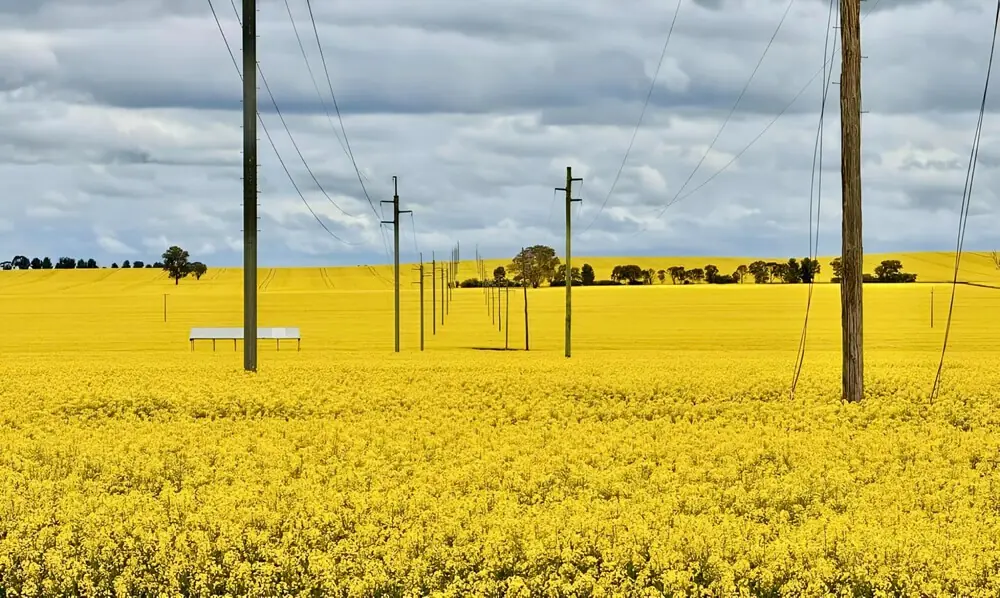
THE Riverina is turning gold weeks ahead of schedule, with some canola crops already more than halfway through their flowering stage as an unusually warm winter brings an early start to one of the region’s biggest agricultural and tourism seasons.
Farmers say this year’s crop is tracking around two to four weeks ahead of normal, with warmer winter conditions accelerating growth and bringing flowering forward across parts of the region.
The early burst of colour is a stark contrast to 2025, when a dry growing season meant many paddocks did not begin turning yellow until towards the end of August.
This year, some crops were already well advanced by the beginning of the month.
A farmer near Coolamon reported in late July that canola in parts of the district had reached about 50 per cent flowering, while crops at varying stages of development across the Riverina could deliver a longer-than-usual spectacle of yellow this spring.
The early flowering is also expected to bring forward the annual influx of visitors who travel through Junee, Coolamon and Temora to experience the region’s increasingly popular canola season.
The three shires form the Canola Trail, which has grown into a significant agritourism attraction as visitors chase the spectacular yellow landscapes each August and September.
Recent tourism figures have shown all three local government areas outperforming the broader Riverina Murray region, highlighting the increasing value of visitor spending to communities along the trail.
Another major drawcard will return later this month, with the purpose-built Yellow Bloom Road canola experience scheduled to open in Temora on August 27, once again allowing visitors to walk among the flowers without entering working farms.
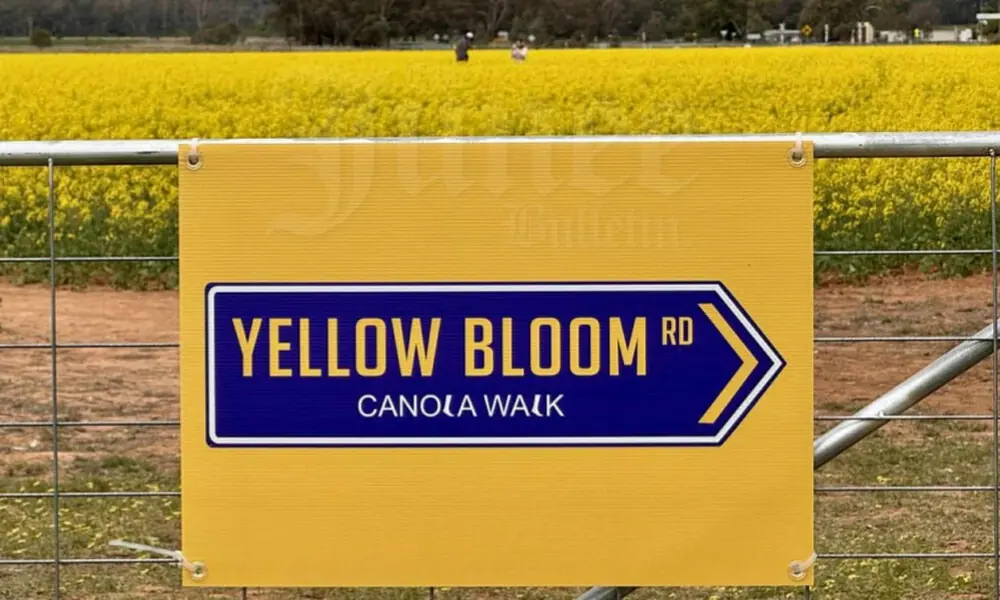
Yellow Bloom Road, Temora | © The Junee Bulletin
The early start has also inspired The Junee Bulletin to launch a new month-long photography competition aimed at capturing the Riverina’s golden transformation.
The Golden Lens 2026 is open to photographers of all ages and abilities, with $250 in cash prizes across Judges’ Choice, People’s Choice and a voter prize draw.
Entries remain open until September 7, giving photographers almost four weeks to wait for the right conditions and capture their interpretation of the season.
Junee Bulletin editor Jaydan Duck said the competition was designed to encourage people to look beyond the traditional canola photograph.
READ MORE: The Golden Lens 2026: Full details
“We don’t just want to see the biggest or brightest paddock, we want people to get creative and show us the season through their eyes,” Mr Duck said.
“Whether you’ve got a professional camera or just the phone in your pocket, it doesn’t matter. Sometimes the best shot comes down to being in the right place, in the right light, at the right time.
“And there’s no need to rush. Entrants have almost four weeks to scout locations, watch the weather, wait for that perfect sunrise or sunset and really think about the shot.”

While the growing popularity of the canola season is good news for regional tourism, farmers are again urging visitors to enjoy the spectacle responsibly.
Unauthorised access to canola paddocks has become a recurring problem during flowering season, with farmers reporting visitors opening gates, entering crops, setting up picnics and even driving vehicles onto private property in pursuit of of the perfect picture.
Aside from trampling and damaging crops, trespassing can create significant safety and farm biosecurity risks through the introduction of weeds, seeds and potentially disease.
Visitors are being reminded to stay on the right side of the fence and to photograph canola from public areas or designated attractions unless they have the express permission of the landholder to enter private property.
The Golden Lens 2026 closes at 7pm on Monday, September 7.
Full entry details, prizes and competition terms and conditions are available here.



Wind in their hair: Cycling Without Age returns to Junee

Sydney murder suspects arrested at Junee prison


