
Local
Coroner finds serious failures after death at Junee jail

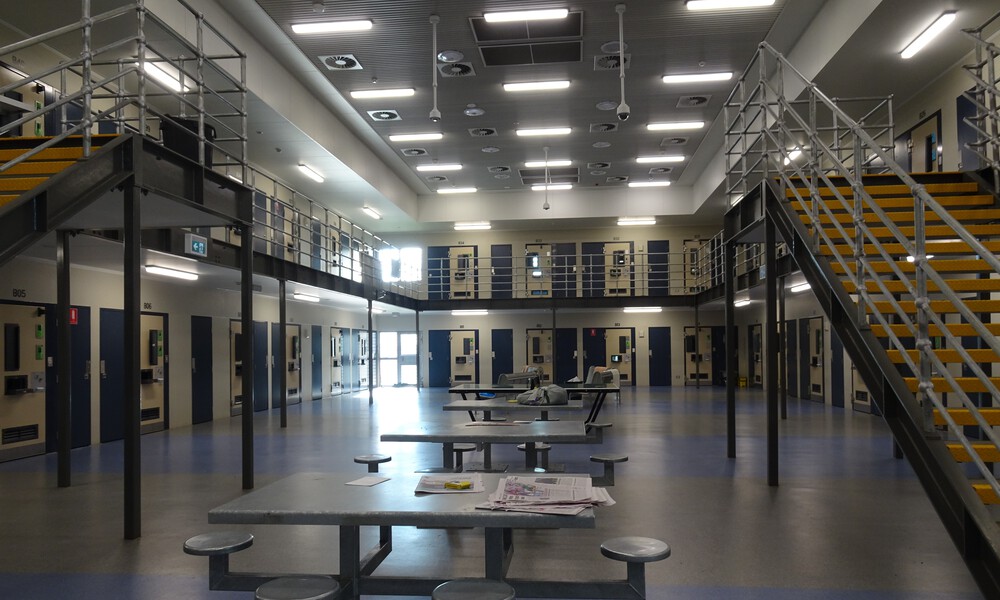
A NSW coroner has exposed serious failures in mental health services at Junee Correctional Centre following the death of a prisoner who spent more than 300 days waiting for treatment that never came.
Alexander Gavranic, 40, died by suicide inside the Riverina jail on February 5, 2023, after repeatedly requesting assistance from mental health professionals during his 19 months in custody.
Despite being placed on a waiting list in April 2022, Mr Gavranic never received an initial mental health assessment, with the court finding his wait of at least 305 days far exceeded the maximum three-month timeframe applicable to his referral.
In findings handed down on Wednesday, October 14, Deputy State Coroner Derek Lee concluded the prolonged delay likely caused distress and deterioration in Mr Gavranic’s mental wellbeing and represented substandard care.
However, the coroner stressed it was impossible to determine whether earlier treatment would have changed the outcome.
The findings followed a three-day inquest in September which exposed major shortcomings in the prison’s mental health system, including severe staff shortages, fragmented referral processes and failures to properly document and follow up prisoners’ requests for assistance.
At the time, just two mental health nurses were responsible for a prison population fluctuating between 700 and 1,000 inmates, with approximately 400 prisoners waiting for mental health treatment.
The court heard the nurses were overwhelmed by demand and forced to prioritise the most urgent cases, leaving other prisoners waiting months for assistance.
Former Junee mental health nurse Bernadette Barton told the inquest the workload was overwhelming.
“We barely scratched the surface,” she said.
Repeated pleas went unanswered
Mr Gavranic, a former Albury and Chiltern resident, had been held on remand at Junee Correctional Centre since June 2021 while awaiting trial on criminal charges.
He had a history of mental health difficulties and had previously received psychiatric treatment.
During his initial reception screening at Junee, he requested a mental health assessment.
He was subsequently placed on the prison’s mental health waiting list on April 7, 2022, classified as a non-urgent Priority 3 referral.
Under the procedures operating at the time, prisoners in that category were expected to be assessed within a maximum of three months.
Instead, Mr Gavranic remained on the waiting list for at least 305 days.
The inquest heard he made repeated attempts to access treatment through several available pathways, including written requests, conversations with correctional officers and referrals made on his behalf.
He also kept handwritten diaries documenting his efforts to obtain assistance.
In January 2023, just weeks before his death, he approached a correctional supervisor asking her to follow up his previous mental health requests.
The officer contacted the mental health team and was advised Mr Gavranic was on a waiting list, but was given no indication of when he would be assessed.
Further requests followed, including a written application on January 30 and contact with prison staff in the days leading up to his death.
His mother also contacted the prison during the week before his death, raising concerns about his mental health.
Despite these efforts, no assessment took place.
“Regrettably, none of these pathways actually resulted in Alex being seen by a mental healthcare professional,” Deputy State Coroner Lee found.

System failed to connect the dots
The inquest identified several weaknesses in the way prisoners’ mental health requests were received, recorded and processed.
Verbal requests were not consistently documented, meaning they could not be linked to written applications or referrals made by correctional officers.
The court also heard that requests which were expected to generate a response were not followed up when no response was received.
Crucially, there was no effective system for recognising repeated requests as a possible indication that a prisoner’s mental health needs had become more urgent.
The coroner found it had not been possible to establish precisely why Mr Gavranic never received an assessment, with incomplete records preventing investigators from tracing what happened after individual referrals were submitted.
“It does not appear that the repeated requests and referrals made by and on behalf of Alex were recognised,” the coroner found.
While correctional officers told the inquest they had not observed obvious signs of distress or heard Mr Gavranic express thoughts of self-harm, the court concluded the prolonged wait for treatment was unacceptable.
The coroner found the delay likely contributed to a deterioration in his mental wellbeing, even though the evidence could not establish that receiving treatment would have prevented his death.
Mental health services stretched to breaking point
The inquest also examined whether the prison had sufficient resources to meet the mental health needs of its inmates.
At the time of Mr Gavranic’s death, Junee Correctional Centre was privately operated by the GEO Group, with healthcare services provided by GEO Healthcare.
The prison has since returned to public management, with Corrective Services NSW assuming responsibility for operations and Justice Health providing healthcare services.
However, evidence presented to the inquest indicated that mental health staffing had remained essentially unchanged following the transition.
The court heard Junee currently had two mental health clinical nurse specialists working Monday to Friday, supported by a visiting psychiatrist attending two days per fortnight.
Justice Health clinical operations manager Adam Vance acknowledged that demand for healthcare in custody exceeded the resources available.
Junee Correctional Centre governor Troy Seychelles also conceded that funding for mental health services was inadequate and that more nurses were needed to provide prisoners with a level of care comparable to that available in the wider community.
He acknowledged there were quite possibly inmates who were not receiving the mental health services they needed.
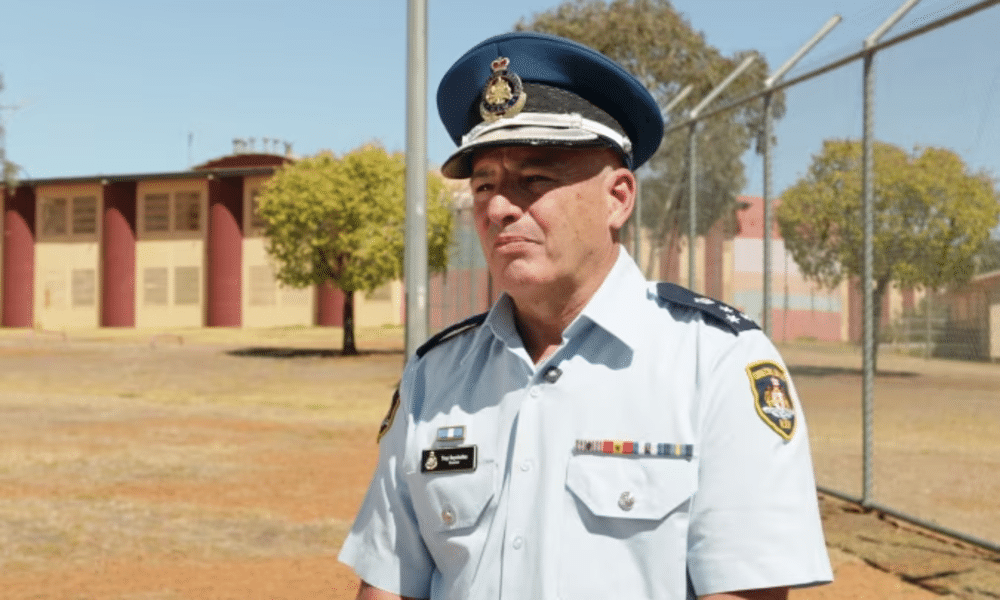
Governor of Junee Correctional Centre, Troy Seychelles | Image: Corrective Services NSW
The evidence prompted serious concerns about whether the existing workforce could cope with increasing demand.
In submissions to the court, barrister Matthew Hutchings, representing Mr Gavranic’s family, described the situation as a “system in crisis”.
He questioned the value of improving referral processes if insufficient healthcare professionals were available to provide timely treatment.
The coroner acknowledged the force of those concerns, finding that demand for mental health care significantly exceeded available resources.
He also warned that the imbalance was likely to worsen as Junee’s inmate population increased.
Coroner demands improvements
Deputy State Coroner Lee made two formal recommendations aimed at improving access to mental health services within Junee Correctional Centre.
The first calls on the Commissioner of Corrective Services NSW to ensure correctional officers receive guidance on thoroughly documenting requests for mental health assistance made directly by prisoners.
The recommendation is designed to ensure requests can be followed up and escalated to senior officers when they are not acted upon promptly.
The second recommendation calls on Junee Correctional Centre’s governor to use the inquest findings to support future funding submissions aimed at increasing the prison’s mental health workforce.
The coroner said additional staffing was needed to adequately meet the significant demand for mental health services among prisoners.
The findings come as Junee Correctional Centre prepares to accommodate a substantially larger inmate population.
The court heard prisoner numbers were expected to increase from 746 in September to 944 in October 2026.
With mental health resources already stretched, the coroner warned that the growing population was likely to place further pressure on the system.
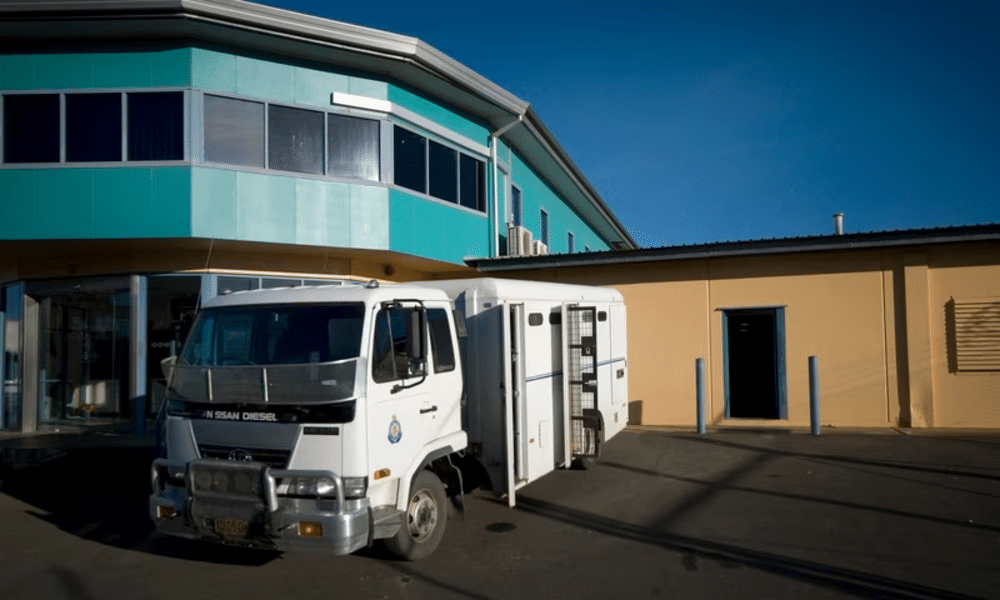
A NSW Police prisoner transportation van parked outside Junee Correctional Centre in 2009. Image: State Library of NSW/Anya van Lit
Family hopes for change
Beyond the evidence of systemic failures, the inquest also heard about the devastating impact Mr Gavranic’s death had on his family.
Born in 1982, he grew up in Victoria and later lived in several parts of Australia, including Albury and Chiltern.
His family remembered him as a fun, kind-hearted man with a larger-than-life personality and a laugh that could captivate an entire room.
He was a much-loved father, son, brother and uncle whose absence continues to be deeply felt.
In a statement read to the inquest, his family expressed hope that lessons would be learned from his death so others would not endure the same experience.
Deputy State Coroner Lee extended his condolences to Mr Gavranic’s loved ones.
The findings have now placed renewed scrutiny on the provision of mental health care inside Junee Correctional Centre, and whether the prison system has the resources and procedures necessary to ensure vulnerable inmates receive timely assistance.
Support is available.
Lifeline provides free, confidential crisis support on 13 11 14, 24 hours a day.
In an emergency, call Triple Zero (000).











New correctional officers welcomed at Junee prison ceremony

National cattle event brings industry experts to Wagga


